ʻIolani Palace Collection

We would like to introduce you to a recent ʻUluʻulu acquisition: The ʻIolani Palace Collection from the Friends of ʻIolani Palace.

IPAL 2

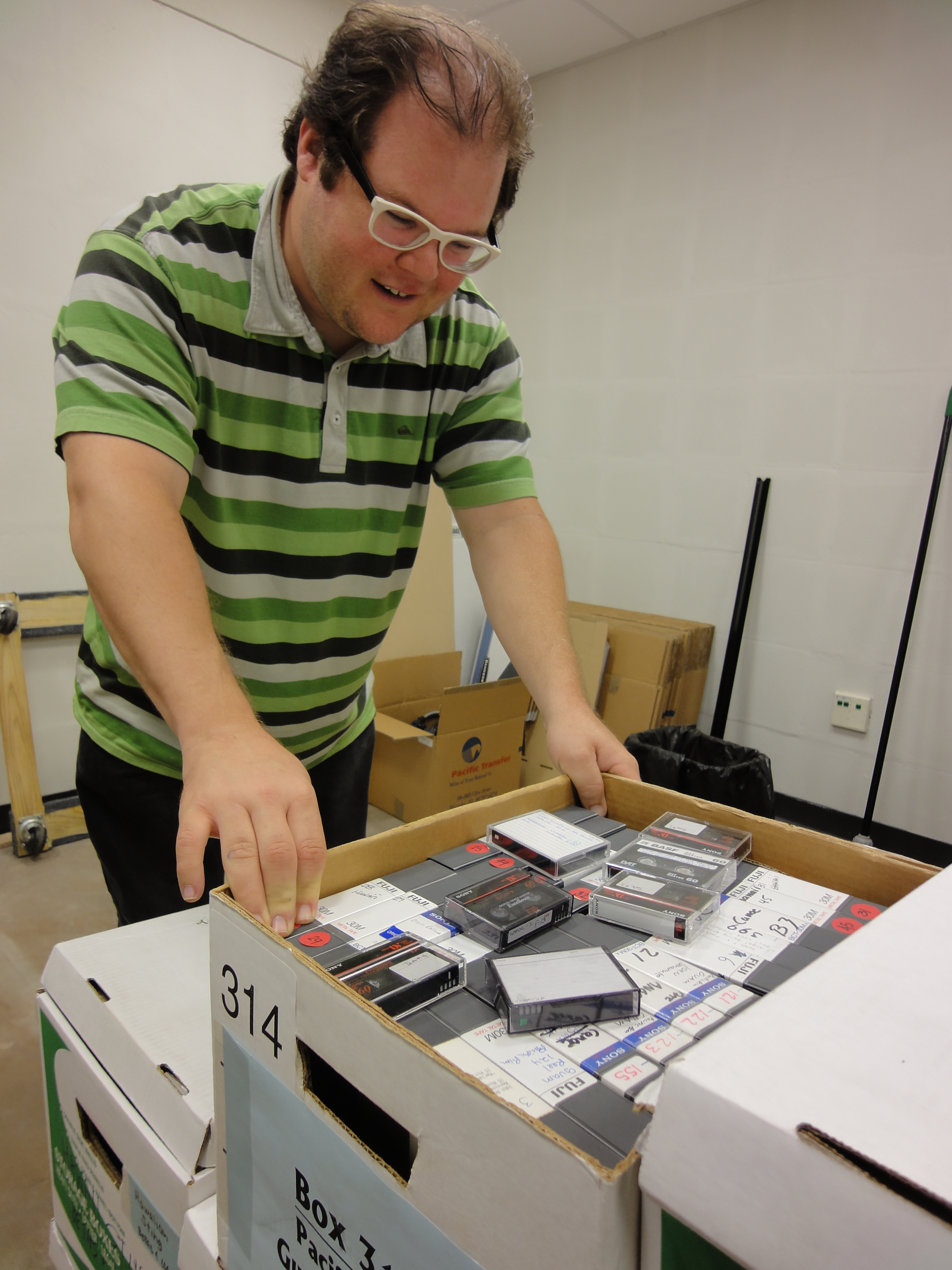
Film cans from the ʻIolani Palace Collection

Label on film reel from the ʻIolani Palace collection

Label on film reel from the ʻIolani Palace Collection

King Kālakauaʻs vision for Hawaiʻi can be seen through the architecture and building of ʻIolani Palace. Built as a statement to the world and infused with Hawaiian symbols to establish his trust with the people, the palace is a hybrid of Hawaiian and western worldviews. The palace had fallen into disrepair after being used as government offices during the various governing eras of the Provisional Government, the Republic of Hawaiʻi and the Territory of Hawaiʻi. In the late 1960s after the government offices moved to the new Capitol Building, the restoration process on the palace began. This collection includes 156 tapes and motion picture film reels documenting the restoration process and events like the Centennial Jubilee and Regatta. These materials will soon be available to researchers and demonstrate the mission of ʻIolani Palace: “to preserve, restore, interpret, share, and celebrate the unique cultural, historical, and spiritual qualities of ʻIolani Palace and its grounds for the benefit of native Hawaiians, the people of Hawaiʻi and the world.”  As the palace stands as an important site for Hawaiians and others, we take this responsibility of the care and preservation of this collection with great honor.

For more about the history of the restoration of ʻIolani Palace, visit their website.

By Koa Luke

‘Ulu‘ulu at AMIA conference

December 6, 2012 was an historic day in Seattle as ‘Ulu‘ulu was represented for the first time at a national conference– at the annual meeting of the Association of Moving Image Archivists (AMIA) held in Seattle, WA Dec 4-7.

Keau George from Hula Preservation Society visits ‘Ulu‘ulu's poster session

Keau George from Hula Preservation Society visits ‘Ulu‘ulu’s poster presentation

Janel Quirante presented “Preserving Hawai‘i’s Moving Image History through Digital Archiving: A Case Study,” co-authored with Jacob Rosen and Robbie Omura, during the conference poster session which highlights “up-to-date research emphasizing the issues and concerns encountered within the moving image archive profession.” ‘Ulu‘ulu’s poster documents our Pilot Project in which we developed and tested standard processes for cataloging, preservation, and access of over 350 hours of culturally and historically significant Hawaiian footage from 1928-1998 and offers a model for organizations undertaking similar projects.

One of the themes of this year’s AMIA conference is “professional collaboration.” ‘Ulu‘ulu’s poster fits nicely within this theme as our Pilot Project was a true collaborative effort with all the institutions and individuals who participated and contributed.

ʻŌiwi Film Festival 2012

The 2012 ʻŌiwi Film Festival kicks off this weekend from Saturday (November 11) and runs to Wednesday (November 14.)  In Hawaiian ʻŌiwi means of the bone, native, or native son.  There exists a rich and diverse community of Hawaiian and Hawaiʻi filmmakers who are telling our stories of Hawai’i.  The ʻŌiwi Film Festival showcases the work of the community which adds to its growth.

The ʻŌiwi film Festivalʻs mission states:
The festival’s mission is to show Hawaii through the eyes and voices of local filmmakers. Films are grouped together to highlight significant themes that recur in many of the films, exploring the preservation of the land, culture and language that range in tone from the humorous to the powerful and poignant .
The Doris Duke Theatre website also states that the festival is “the first festival dedicated to the work of Indigenous Hawaiian filmmakers.”

The festival kicks off this weekend Saturday 7:30 P.M. with the premiere of Anne Marie Kirkʻs film The Hawaiian Room.  The film focuses on the Hawaiian Room a nightclub in 1937 New York which showcased hula dancers, singers, and musicians, from Hawaiʻi. The film is told through oral histories of the people who were there as well as archival footage.  Maile Loo-Ching, founder of The Hula Preservation Society (HPS), collected many of the oral histories of the kūpuna.  Below are some of The Hula Preservation Societyʻs and related clips in our collection.  The Festival also features “Under a Jarvis Moon”, “Papa Mau: The Wayfinder”. and “Kai Wahine” paired with a short each night.  Be sure to Support ʻŌiwi (Hawaiian) filmmakers and purchase your film festival tickets here.

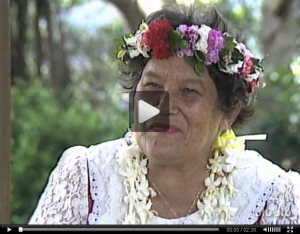
Interview with Nona Beamer

Nona’s career includes almost 40-years of teaching at Kamehameha Schools, countless workshops throughout Hawai`i and the world, numerous publications, and 70-plus years of performing. She has dedicated her life to the education of Hawaiians and those who have a desire to learn about Hawaiian culture and hula.  (From Tutu Nonaʻs Bio on Hula Preservation Society website).  HPS was started in honor of Aunty Nona, by her hānai daughter Maile Loo-Ching.

Click here to listen to Aunty Nona Beamer singing Ku`u Pepe Li`i Li`i

Click here to listen to Aunty Nona and Evlane Tom discussing kāne and wahine movements in hula and Hawaiian social stratifications

Click here to listen to an interview with Johnny Almeida

Click here to listen an interview with Aunty Alice Namakelua

By Koa Luke in collaboration with Robbie Omura

UNESCO World Day for Audiovisual Heritage

The United Nations Educational, Scientific, and Cultural Organization (UNESCO) has declared October 27 World Day for Audiovisual Heritage.  The designation of this day is “to raise general awareness of the need for urgent measures to be taken. It also focuses on acknowledging the importance of audiovisual documents as an integral part of national identity.”

From UNESCO’s Website:

Transcending language and cultural boundaries, appealing immediately to the eye and the ear, to the literate and illiterate, audiovisual documents have transformed society by becoming a permanent complement to the traditional written record. However, they are extremely vulnerable and it is estimated that we have no more than 10 to 15 years to transfer audiovisual records to digital to prevent their loss. Much of the world’s audiovisual heritage has already been irrevocably lost through neglect, destruction, decay and the lack of resources, skills, and structures, thus impoverishing the memory of mankind. Much more will be lost if stronger and concerted international action is not taken.

This falls in line with the mission and work that ʻUluʻulu aims to accomplish recognizing the integral part moving images play in national identity and human rights:

‘Ulu‘ulu: The Henry Ku‘ualoha Giugni Moving Image Archive of Hawai‘i aims to perpetuate and share the rich moving image heritage of Hawai‘i through the preservation of film and videotape related to the history and culture of Native Hawaiians and the people of Hawai‘i.

Through ʻUluʻulu people can access these important moving treasures to learn from the elders of Hawaiʻi who struggled to preserve culture, heritage, language, and rights.  Here are some clips from ‘Ulu‘ulu’s collections that demonstrate UNESCO’s message and vision of World Day for Audiovisual Heritage!

Hawaiian Rights

Waiāhole/Waikāne March. Victoria Keith Productions Collection

In the 1970s the residents of Waiāhole/Waikāne on the windward side learned that the landowner had planned to evict them and build new condominiums. The local residents, realizing that this would drastically change their way of life, organized to stop the project from moving forward.  This formed a diverse movement of Hawaiians, locals, and students from the university which was successful in halting the project.  This action, along with other actions such as the struggle against evictions at Kalama Valley, was part of a large grassroots movement that re-emerged in Hawaiʻi during the 70s and continues on today.
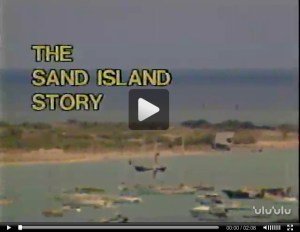
The Sand Island Story. Victoria Keith Productions Collection

As rapid development hit Hawaiʻi in the 70s and 80s, Hawaiians struggled to maintain their way of life. Sand Island was a “neglected dumping grounds for garbage and industrial wastes” in Honolulu harbor. Over 100 Hawaiian families cleaned up the island making it their home; living in the cultural ways of their ancestors. They struggled with the state and were eventually evicted, making way for a state park. But this action was part of the re-emergence of the Hawaiian sovereignty movement where people articulated and began to fight for Hawaiian rights.

Language
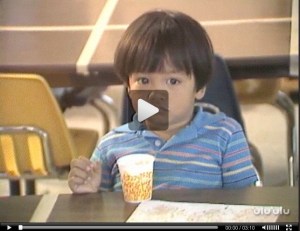
Pūnana Leo classroom footage. Juniroa Productions Collection

Interview with Kauanoe Kamanā. Juniroa Productions Collection

In 1896 under Act 57 Sec. of the Laws of the Republic of Hawaiʻi ʻŌlelo Hawaiʻi (Hawaiian language) was banned. The banning of the language was detrimental to Native Hawaiians, because through language comes identity and culture. Around the cultural renaissance a movement was started to revive the Hawaiian language for the survival of Hawaiians. As part of this movement Pūnana Leo (language nests) were formed as Hawaiian language immersion schools. These were formed by new Hawaiian teachers with the help of manaleo (native speakers of the language). Faced with challenges such as budgets and facilities, the language nests thrive today and are key in keeping the language alive.

Hula

Leinaʻala Heine : Chant and Hula. CLEAR, HKG Pilot Project Collection
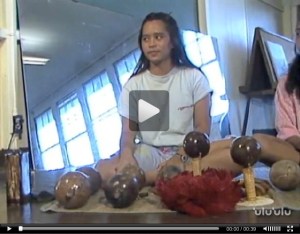
Hāna hālau discussing hula implements. Juniroa Productions Collection

With the arrival of the missionaries, hula was denounced in the early 19th century. During the reign of King David Kalākaua hula was encouraged by the King as part of his campaign to revive the Hawaiian culture. After the overthrow, hula remained underground and with only a few families– it was not danced in public. However, in the 1970s as part of the Hawaiian cultural renaissance, Hula began to be practiced and performed on a massive scale, and remains an important part of Hawaiians reclaiming their identity and tradition. Hula honors the elements and teaches us the history of and honors wahi pana (sacred sites), Hawaiian deities and aliʻi.

— By Koa Luke

Pacific Islanders in Communication Collection

We are proud to announce our newest acquisition from the Pacific Islanders in Communication (PIC).  Established in 1991, the mission of PIC is to support, advance, and develop Pacific Island media content and talent that results in a deeper understanding of Pacific Island history, culture, and contemporary challenges. The acquired collection includes the final cuts and raw materials for productions such as, Holo Mai Pele, Nā Kamalei -The Men of Hula, Then There were None, One Voice and many more.

The Hawaiʻi International Film Festival kicks off tonight! Make sure to check out some great films sponsored by PIC :

Jake Shimabukuro: Life On Four Strings

The Land of Eb

Nova- Mystery of Easter Island

Nuclear Savage

Sione’s 2: Unfinished Business

Sound of Crickets at Night

Ua Mau Ke Ea: Sovereignty Endures

Pacific Shorts Showcase


Cleaning Videotapes for Preservation

By Koa Luke

Koa is a Video Intern or “Vintern” at ʻUluʻulu. His current projects at the archives include collection inventories, producing a Video Basics tutorial for volunteers, writing Blog posts, and cleaning 3/4” Umatic videotapes.

Carefully loading the SAMMA Clean with a 3/4″ Umatic videotape

Today at the archives I experienced the exciting process of cleaning and prepping a video for digitization! When a tape is accessioned into the archive, the tapes are carefully inspected for mold or crystallization. If the tape is moldy we place it into a special quarantine area so that it will not contaminate the rest of the collection. If crystalline deposits appear on the tape, the image quality may be compromised. Crystalline deposits can appear on older tapes housed in humid or high temperature storage areas.

Crystalline deposits can be seen on the outer edge of the videotape

But fear not, the tape can be cleaned through the magical machine SAMMA Clean developed by Front Porch Digital. ʻUluʻulu uses SAMMA Clean not only to raise the quality of the tape image for digitization, but to preserve and prevent further deterioration of the images on the tape. Before a “dirty” tape is digitized, it must go through the SAMMA Clean. When we place the cassette into the SAMMA Clean Machine the first thing it does is rewind the tape to the beginning, this will make the cleaning process more efficient. Then the tape goes through a forward and reverse pass returning to the cassette.

Pellon rolls inside the SAMMA Clean gently remove surface dirt from videotape

With each pass the tape runs through rolls of pellon cloth removing any dust or in this case crystals from the surface. After the tape is returned to the cassette, data from the process is generated and added to the catalog’s item record as metadata. The three different categories added to the record are: tissue dirt, torque (how tight or loose the tape is wound) and reflectivity. Just another exciting day at ʻUluʻulu The Henry Kuʻualoha Giugni Moving Image Archives!

After the SAMMA Clean process, the crystalline deposits are gone!

New Vintern

We are happy to announce ʻUluʻulu’s newest volunteer intern, Koa Luke. Koa is a currently a LIS student at UH Mānoa.

New Home

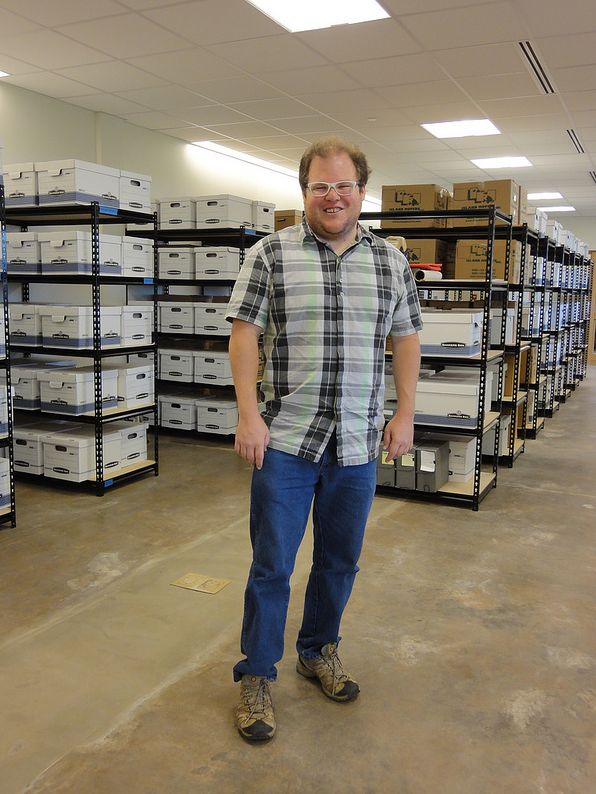
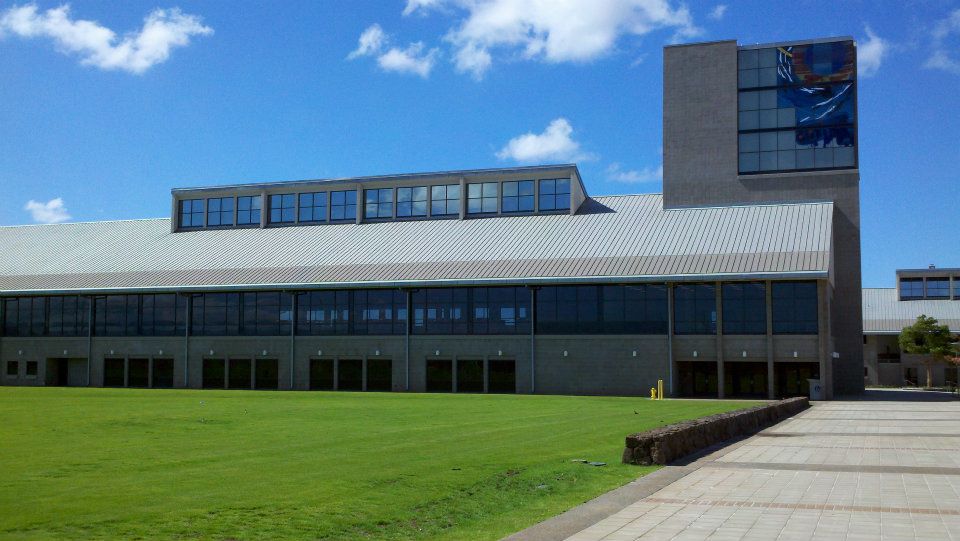
ʻUluʻulu has moved to its new home inside of the University of  Hawaiʻi – West Oʻahu Library.

Click here for more photos of our move from Waiakamilo to Kapolei.

New address:
ʻUluʻulu
UHWO Library, 1st floor
91-1001 Farrington Highway
Kapolei, HI  96707

Our phone lines are not yet operational. In the meantime, please reach us by email at: uluulu@hawaii.edu.
Happy Labor Day weekend!

The Archive is Moving

ʻUluʻulu is relocating to the new UH West Oʻahu Kapolei campus on August 14, 2012. We are temporarily shutting down our lab and may have limited access to our telephone and emails from Aug 10-17. We apologize for any inconvenience but will be back in business as soon as we can!

In the meantime, please enjoy this highlight reel of footage from some of our Pilot Project participants:

This video footage may be protected under U.S. copyright law and is provided for educational and research purposes only.

Hana Hou Article about ʻUluʻulu


ʻUluʻulu is featured in the August/September 2012 issue of Hana Hou! Magazine.
Read Matthew DeKneffʻs article “Saving Celluloid” to learn about our origins, our digital preservation lab and plans for our new facility at UH West Oʻahu Library!