Category Archives: Uncategorized

Celebrating Black History Month

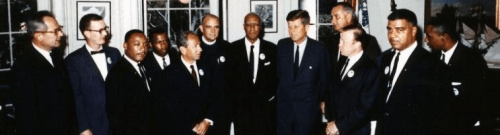
Black History Month is an annual celebration and a time to recognize African Americans who have struggled and succeeded in an attempt and a proclamation to create equality.  One of the most talked about and influential individuals that has helped to establish a path for African Americans is Dr. Martin Luther King, Jr.  Dr. King gave a speech about a dream that was so moving, he eventually pushed his notes to the side, one of his famous lines are, “we are not satisfied, and we will not be satisfied until justice rolls down like waters and righteousness like a mighty stream”, he transformed his speech into a sermon.

Photo Credit: pbs.org/marchonwashington

Photo Credit: pbs.org/marchonwashington

President Kennedy helped the civil rights movement take place.  He also choose Hawaiʻi to have a possible conference for the Civil Rights bill.  The reason behind him choosing Hawaiʻi as a forefront for the conference was because Hawaiʻi represents everything we are and that we hope to be in the future.

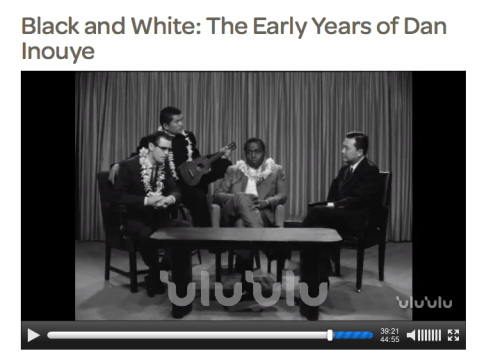
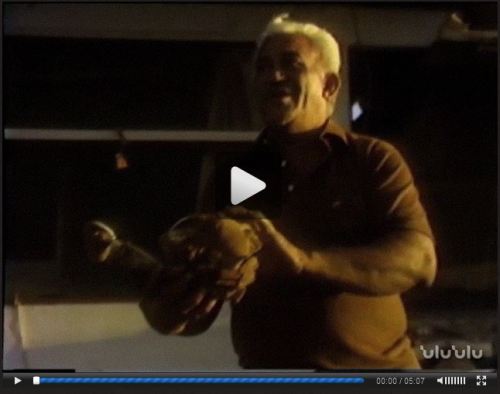
To help honor and celebrate Black History Month, we thought we’d highlight “Black and White: The Early Years of Dan Inouye.” While the issues of the day were many, this film focuses on Hawaiʻi as a multicultural community that is more an oddity to Congressional Members at the time who were wrestling with Civil Rights legislation. In an interview the late Senator Inouye responds, “We have been able to show not only the people of the United States but the people throughout the world that it is possible for men and women of all different national origins to live together and work together and play together with very little if any friction — and we’ve found the secret in Hawaiʻi.”

Click above to watch

Click above to watch the full video

Post by Sage Kaonohi, ʻUluʻulu Intern

Welcome Letitia Lavoie – Spring 2016 Intern

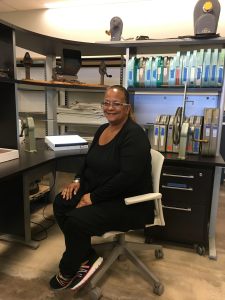
We’re excited to have Letitia Lavoie as our Spring 2016 Intern! Letitia will be working mainly with the CLEAR (Center for Labor Education & Research) Collection – helping to perform quality control checks on recently digitized footage and then assisting with the cataloging of these videos. She will be periodically sharing about her research and experiences here at the archive in future blog posts, so stay tuned for those! We asked her to kick off her blog writing with a brief introduction, please take a look below…

Letitia Lavoie, 'Ulu'ulu Intern

Letitia Lavoie, ‘Ulu’ulu Intern

As a student here at UHWO, I spend countless hours in the Library doing homework and, before starting my senior practicum here, I could only imagine what it would be like to be a part of something so great that future generations will have a chance to see real footage of the past instead of only reading about it. It is like going back in time and being there but most of all it is capturing the emotions and the energy that keeps you wanting to know more and see more. I am truly blessed to become one of the newest members in helping to preserve Hawai‘i’s moving image history.  The ‘Ulu‘ulu: The Henry Ku‘ualoha Giugni Moving Image Archive of Hawai‘i has one of the most dedicated teams of professional people that I get to work with. In my first week, the staff here has made me feel welcomed as if I have been here forever.

I am a senior with plans to graduate in May of 2016 as a Social Science Major with a concentration in Sociology and a Certificate in Democratic Principles and Social Justice, which brings me to the Archive. Along with working with the staff, I will be researching Hawai‘i’s Sugar Strike in the “Rice and Roses” collection which has been recently digitized. I am excited to learn about and watch footage on Hawai‘i’s labor strikes that will allow me to have a glimpse of history and also examine the differences and similarities pertaining to the plantation workers’ demands.

What I hope to gain is a richer knowledge from the training that I will be getting. I wish to spread the news to other students about how they can access help for their research papers by filling out a request form and then working with Shavonn, the Reference Archivist, to find the videos and resources they might need.

ʻOnipaʻa: Turning Points

This year will mark the 123rd anniversary of the overthrow of the Kingdom of Hawaiʻi. In observance of this anniversary, and to promote education and awareness of Hawaiʻi’s history, we will host a panel discussion on Jan. 14th, 9:30am-10:45am, in the ʻUluʻulu Exhibition Space (1st floor, UH West Oʻahu Library).

This slideshow requires JavaScript.

Panelists Dr. Leilani Basham, Dr. Masahide Kato, and Dr. Kealani Cook will
present on the 1893 overthrow and the 1993 ʻOnipaʻa march and events at ʻIolani Palace in observance of the 100th anniversary of the overthrow. Recently digitized footage of the 1993 march and events (from the Office of Hawaiian Affairs Collection) will be featured during the panel.

Onipaa Turning Points Flyer

ʻOnipaʻa: Turning Points is sponsored by the ʻUluʻulu Moving Image Archive of Hawaiʻi, the UHWO Hawaiian-Pacific Studies Program, UHWO Political Science Program, and the UH West Oʻahu Library. We welcome all UH West Oʻahu students, faculty, and staff as well as members of the public to join us for this event.

For more info about this event or to view related archival footage, contact us at uluulu@hawaii.edu.

All images featured in the slideshow above are screen grabs from raw footage in the Office of Hawaiian Affairs Collection.

Paid 2016 Summer Roselani Media Preservation Internship

Roselani Internship 2016

Applications are now being accepted for the 2016 Roselani Media Preservation Internship at ‘Ulu‘ulu Moving Image Archive!

The student selected as the 2016 Roselani Intern must be committed to the preservation of our media history and enrolled in a moving image or archival academic program. Working side-by-side with experienced archivists, the intern will gain practical experience in a moving image archive.

The intern will receive a $3,000 stipend.

Application Form and Instructions may be downloaded here.

Key dates:
January 15 – March 15: Applications accepted
April 1 : Selection made
May – September : Internship takes place over 6-8 consecutive weeks (200 hours)

Interested in what a Roselani Media Preservation Internship is like? Read the final reflections from our 2015 Roselani Intern April Rodriguez…

Roselani Intern April RodriguesMy time as the Roselani Media Preservation intern has come to an end. Upon reflection, I realize I had an amazing opportunity to develop professionally while also gaining a better sense of Native Hawaiian culture.

A favorite experience of mine involved straying from the moving image archive with my fellow colleagues to participate in the Mana Moana event. This event was centered on storytelling through land and film.  We spent the early morning at the MA‘O Farm pulling weeds from the salad beds and picking crates full of string beans. I thoroughly enjoyed connecting with the student workers at the MA‘O Farm and felt so honored to be a part of the harvesting and share in a delicious meal made with ingredients picked from the farm. The event concluded with an evening showing of clips from our archive and movies from director Taika Waititi. This kind of community interaction of gathering and sharing is something I believe to be very special. I sincerely hope this event will continue to be held annually and that I can work for an archive that has this same type of active community involvement.
Not without emotions, some of my job duties involved viewing archival footage about the removal of residents from Sand Island. What an emotional roller coaster of stories and images captured by local news station KGMB.  Outside of work I also attended numerous free events such as the Queen Lili‘uokalani birthday celebration. At that event I talked with all the vendors and listened to various discussions about Hawai’i  – U.S. relations and the mixed feelings regarding the status of the Hawaiian Kingdom. To say the least, I was shocked to learn how Hawai‘i became a state within the U.S.A. I will never be able to look at the sugar or pineapple industry of Hawai‘i the same way again.

One of the most memorable comments made by someone being interviewed by KGMB was, “I wish for the fragments of our past will come together in the future for ourselves and the world.” This was part of an interview from the 1980s New Years celebration segment (ENG collection).

In closing, I am thankful to the people of Hawai‘i for their generous hospitality throughout my stay on the island of O‘ahu. A special shout out to the drivers of The Bus for being so helpful and to the uncle that took me surfing it was such a fantastic experience. I am also thankful to the Hawai‘i Community Foundation and the Giugni family for making the Roselani Media Preservation Internship possible. Even though I’m leaving the island, my time at the archive will not be forgotten and I go forth with having made new friends.

2015 Highlights

Another year is coming to a close and the staff at ʻUluʻulu would like to take this time to wish you all a very Happy and Healthy New Year! Mahalo nui for your support throughout 2015 – because of you, our collection is growing!

We’d like to take a moment to share some of the highlights of 2015 with you. Click here to view the ʻUluʻulu 2015 Highlights report on our new collections, digital preservation projects, television and film premieres and more.

While we have accomplished a lot in 2015, we look forward to accomplishing even more in the coming year! See you all in 2016!

newletter screenshot


Dear Thalia: Archival Footage Featured in HIFF Film

Dear Thalia screened at packed theaters on two days of this year’s Hawaii International Film Festival.  In Dear Thalia, Rex Moribe documents the trials and tribulations of the Martin family that is living on the streets of Kaka‘ako with their young daughter Thalia.  Filmed in guerrilla style, much of it filmed by the family themselves, the audience gets a firsthand account of what it’s like to live on the streets where it is illegal to sit and lie on the sidewalks (through the “sit-lie bill”).  This makes it difficult when public parks close at night and shelters have strict guidelines.  One of the most touching moments of the film is when Thalia’s mother talks about when the city comes to do the sweeps and how her daughter gets ready for them.  Sweeps are when city workers come and remove [throw away] all of the personal belongings of the people living on the street; in this scene, the mother talks about how Thalia gets all her stuff ready and packed away so that it won’t be removed by the workers.

sandisland

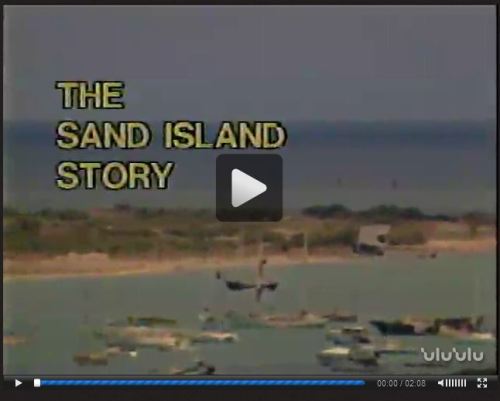
Click image to view more info about “The Sand Island Story”

We met Rex Moribe in the early stages of the film when he contacted the archive to research footage from Victoria Keith Production’s The Sand Island Story. During his visit, Moribe shared with us, along with chili pepper water, a cut of his trailer.  As we watched the images on the screen, we knew he was on to something very powerful; he was exposing the homelessness issue and telling the story through the lens of people who were actually experiencing it.  Moribe ended up working with Victoria Keith Productions and using raw footage interviews from the documentary.  During the late seventies a community of people moved out to Sand Island located in Honolulu Harbor.  The island was used as a dump and so a community started living there; living off the land and sea as was abundant in fish and caring for it.  Eventually they were removed from the land by the state but not without a struggle; The Sand Island Story documents the struggle to resist eviction.  Much of the footage Moribe used included interviews with Clement Apolo, a resident of the island and a Hawaiian war veteran, as the issue progressed from organizing to evictions.

Clement Apolo

Click image for more archival videos of Clement Apolo

Moribe juxtaposed what was going on in Sand Island with what is happening now in Kaka‘ako and it magnified the issue.  One of the last scenes Moribe used from the documentary shows the Sand Island residents singing Hawai‘i Aloha after the evictions — a symbolic scene which captured the community’s perseverance even in times of hardship.

We were happy to see archival footage used to educate people;  films like this breathe life back into the archive and put things into context. A former Sand Island resident was in the audience for one of the screenings and was pleased with the film. Hulo hulo, congratulations Rex Moribe on the premiere and getting the word out about this issue and to the Martin ‘Ohana for opening up your home and personal lives to expose the issue it will make a difference! To find more information about the film, visit  https://dearthaliamovie.wordpress.com/.

dearthalia

Photo from dearthaliamovie instagram

Celebrating Filipino American History & Archives

We’ve shared previously that October is American Archives Month but did you know that it’s also recognized as Filipino American History Month?

Why was October selected for Filipino American History Month (FAHM) you ask? Well, it was in October of 1587 that the presence of Filipinos in the continental United States was first recorded; “Luzones Indios” on board the Spanish galleon Nuestra Senora de Esparanza arrived in Morro Bay, California on October 18, 1587.

Recognized in the United States for several years, FAHM was officially recognized in Hawai‘i in 2008. This year’s theme is “1965: Tipping Point for the Filipino American Community.”

To help honor and celebrate the many contributions of Filipino Americans, we thought we’d highlight videos in our collections that share about Filipino heritage and the Filipino experience in Hawai‘i. Click on the images below to view the clips on our website and then contact us to watch the full-length videos for these and other videos related to the heritage and history of Filipino Americans in Hawai’i!

Hanapbuhay Filipina : Looking for Work in Hawaii
screenshot_title728A look at Filipino immigrant women and their problems with finding suitable employment in Hawaiʻi. Victoria Keith Productions Collection.

Military Training
screenshot_title636Possibly footage of Filipinos training for U.S. military and working on sugar plantations. Lyman Museum and Mission House, HKG Pilot Project Collection.

Other resources for info on Filipino American History:
Filipino-American Historical Society of Hawaii
Filipino American National Historical Society
eFil Filipino Digital Archives & History Center of Hawaii
Center for Philippine Studies, UH Mānoa

First Friday Film Fact – Super 8 turns 50!

Super 8mm turned 50 this year! The film was first sold in 1965 as an improved “super” format to address the challenges of standard 8mm (often referred to as Regular 8mm) which was introduced by Kodak in 1932. With the invention of the 50-foot cartridge, Super 8 made filmmaking more accessible for amateurs. A lot of well-known filmmakers actually got started making Super 8 movies at home, including Steven Spielberg, Peter Jackson, and Tim Burton.

Lānaʻi and Maui Vistas,  HKG Pilot Project Collection : Lānaʻi Culture and Heritage Center

Lānaʻi and Maui Vistas, HKG Pilot Project Collection : Lānaʻi Culture and Heritage Center

We have several Super 8 films here at ʻUluʻulu  in the Hawaiʻi Home Movies Collection, Joe Fumio Konno Collection, and HKG Pilot Project Collection among others. Click on the above image to get an idea of what footage shot on Super 8 film looks like – it’ll direct you to the Lānaʻi and Maui Vistas video clip on our website. The film, donated by the Lānaʻi Culture and Heritage Center, includes various footage of Lānaʻi and Maui shot on Super 8. Contact us to watch the full video as well as others in the archive that were shot on Super 8!

… You may very well have home movies on Super 8 film at home! Check your collections or talk with family to try to locate them. And, remember to keep and care for the original films – even if you’ve already digitized them. Feel free to contact us for advice and other help caring for your films 🙂

Happy Birthday Super 8!

Introducing our 2015 Roselani Intern

We’re happy to introduce our first Roselani Media Preservation Intern at ‘Ulu‘ulu! April Rodriguez is from Selma, California. April earned a BA in Theatre Arts with an emphasis in Technical & Design  from Cal State Hayward in 2005 and a MA in Library and Information Studies from the University of Wisconsin – Madison in 2015. During her 6 week internship here at the archive, April will mainly be cataloging videotapes and assisting with other processing responsibilities.

Continue reading below to learn more about April and what she hopes to learn during her internship at ‘Ulu‘ulu.
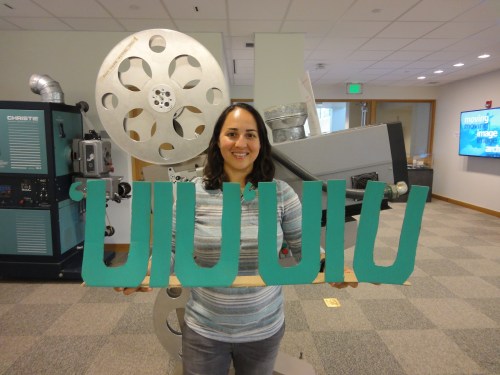
Roselani Media Preservation Intern April Rodriguez

Roselani Media Preservation Intern April Rodriguez

What brought you here to ‘Ulu‘ulu? What are some of the things you’re hoping to learn during your internship with us?

How do I begin to answer this question…Ulu‘ulu has been on my radar for a while as one of those archives I needed to work at some day. ‘Ulu‘ulu is so appealing to me as an archivist because of its mission to preserve cultural material and because it is a moving image archive. Those working at the archive are about preserving the materials first and respectfully providing access second. There has been much discourse about access and about the duty of the library or archive as a public good to serve their community. I have been taught about protocols guiding accessibility to cultural materials and so I appreciate the sensitivity with which the people here at ‘Ulu‘ulu apply to the donors and the materials in the archive.

Also ‘Ulu‘ulu collection is mostly video and as a freshly minted grad student we learned that this type of format is in danger of being lost due to decay of the tape or the numerous parts within it.  Thus, I’m fascinated about how a fairly new archive on an island deals with this kind of dilemma?

Could you please share a little about the film preservation project you worked on with the Oneida Nation?

The Oneida Nation Film Preservation project involved collaboration between a federally recognized sovereign nation, the Oneida, of Wisconsin and graduate students in the Tribal Libraries, Archives, and Museums (TLAM) course at the University of Wisconsin – Madison School of Libraries and Information Studies. Oneida Nation has hundreds of boxes of film in their archive from a mid-1970s educational show called “Forest Spirits​.” Members from the Oneida Community such as their tribal historian and historical archivist wanted to digitize portions of the film in order to provide access. This included assistance with gathering the technology to view the film and a framework for prioritizing which films to digitize.

This project is just one example of the kind of sharing and learning that goes on in the TLAM course. I hope someday that a similar TLAM course based on Native Hawaiians will be offered by UH Mānoa’s library program.
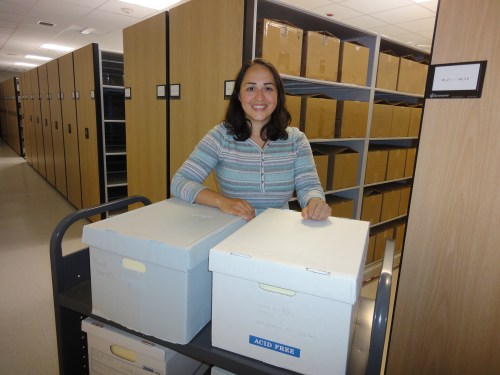
April Rodriguez

What are you working on at ‘Ulu‘ulu ?

My days at the archive have been all about MAVIS. Merged Audio Visual Information System (MAVIS) is a program built specifically for audiovisual materials to be cataloged. Before I go more into MAVIS I should point out that
there is a lot of behind the scenes work that isn’t pretty that goes on at libraries and archives. Just like when I use Netflix or shop at Foodland, I search for what I want without giving it another thought as to how all this stuff was organized.

My job is to use MAVIS to organize parts of the collection so that it can be found when searched for.

What are your career goals?

Much like the ‘Ulu‘ulu moving image archive, I want to work for an archive that is affiliated with a creative entity. My focus is audiovisual material and I enjoy handling both the analog and the digital media.

I strive to develop into an excellent audiovisual archivist so that I can one day help underserved communities, be it indigenous peoples or performing artists, preserve their stories. In essence I want to be an archivist without borders.

So you’ve been here for a week or two now, what are you enjoying most about Hawai‘i? 

I look at this island as a person not from here and I see beauty in the sky, in the ocean, in the green mountains, and in the sunsets. I love the ocean and any chance I get I catch Bus 40 to the water.

 

Happy 125th Birthday to Duke Kahanamoku

Duke Kahanamoku (1890-1968) (image via Wikimedia Commons)

Today we remember Duke Kahanamoku who would have been 125! Hauʻoli lā hānau!  He is being remembered coast to coast — from New YorkWashington D.C. to Los Angeles and all points in between. Here in Hawaiʻi, don’t miss a very special exhibit on Duke Paoa Kahanamoku Exhibit at Bishop Museum through November 30th – you will love it!
At the archive, ʻUluʻulu has an audio recording from the eulogy delivered by Duke’s close friend and radio/TV personality Arthur Godfrey at St. Andrew’s Episcopal Cathedral calling this great Hawaiian man “the soul of dignity.”  Contact us if you would like to hear it!