ʻUluʻulu is making some big and exciting virtual changes! We are changing webpages from our current one to a new UHWO microsite. This site will be better connected to the University of Hawaiʻi system and it will also be a starting point for research using our new Recollect catalog!
Moving forward with the new site and new catalog also means that we will be retiring this blog. We will continue adding news and blog posts to our new site, and this site will remain accessible for past stories. Our slideshow, below, gives a glimpse into the evolution of our archive, partnerships, services and staff over the years.
Reach out to us with any questions you may have about our transition at our email: uluulu@hawaii.edu
Thank you again for all the support and we’ll see you in our new virtual world!
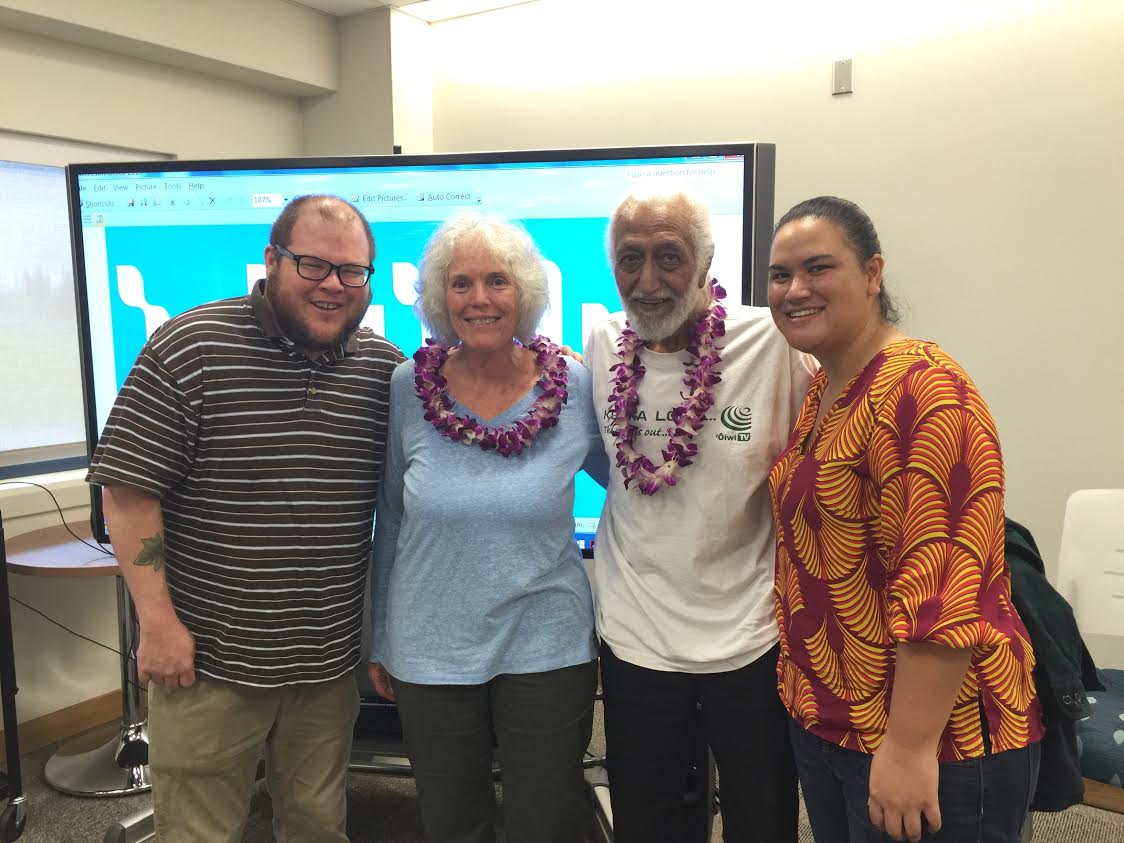
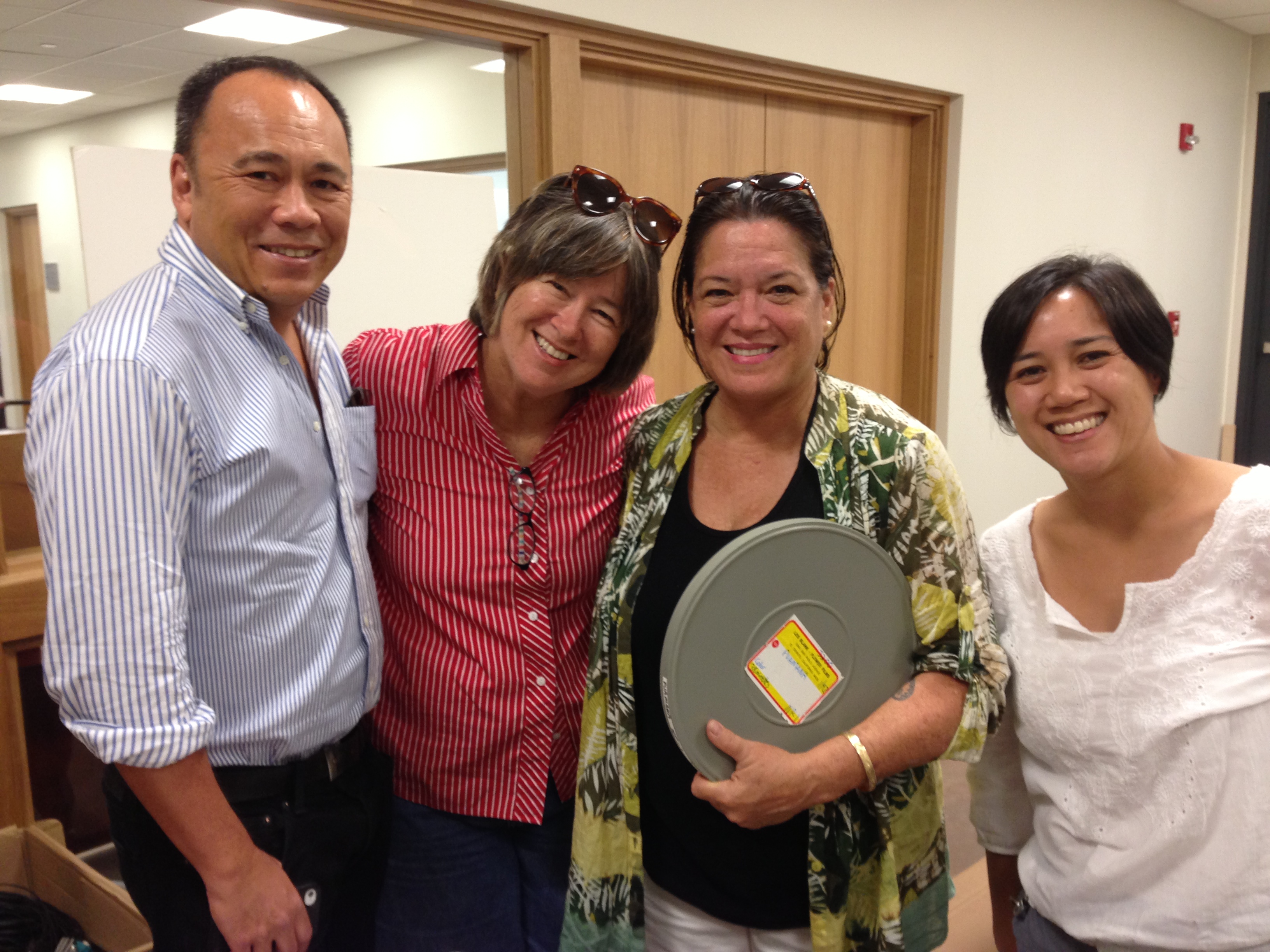
Posing with some of the wonderful Liljestrand collection with Shan Liljestrand.
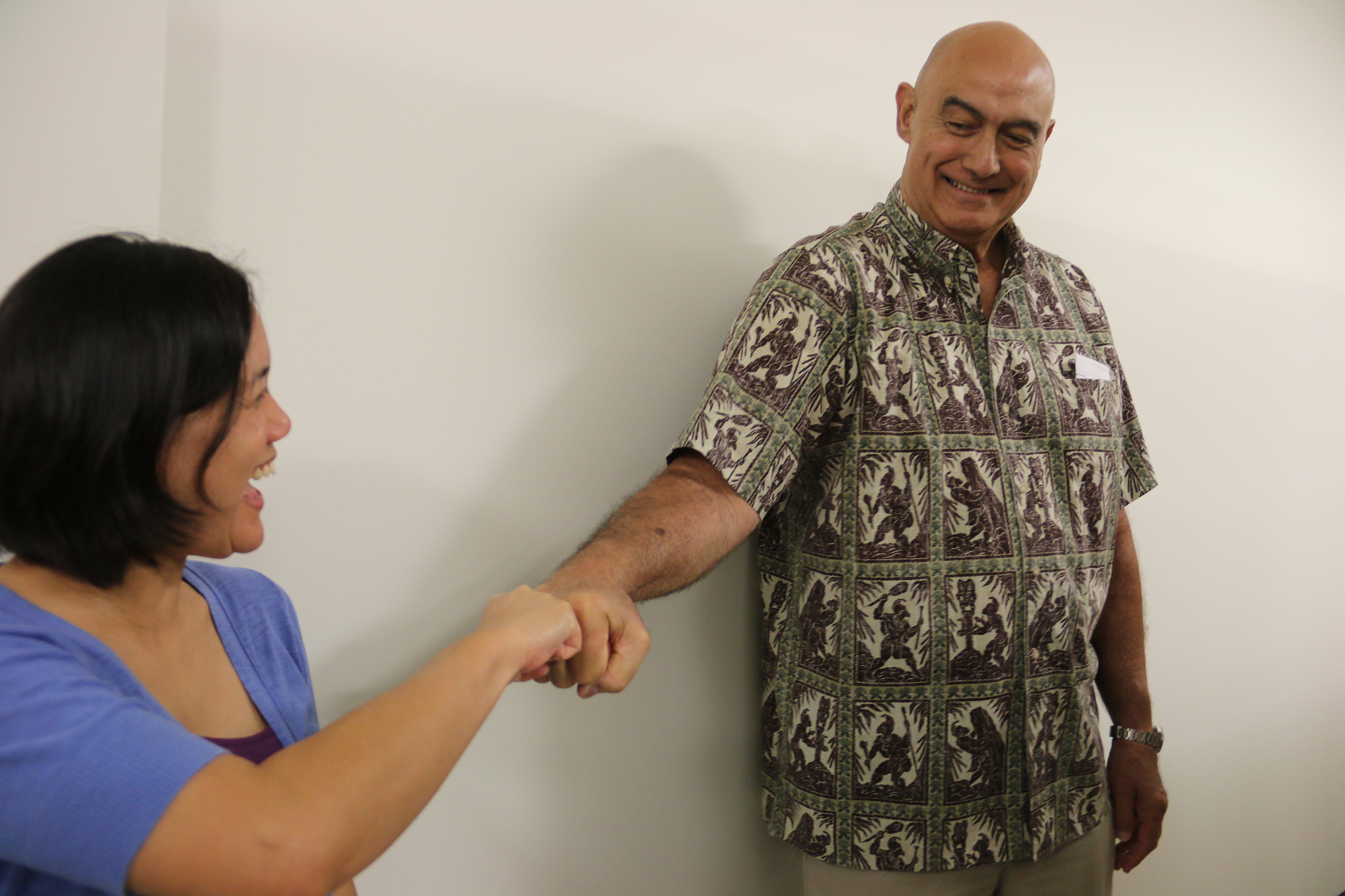
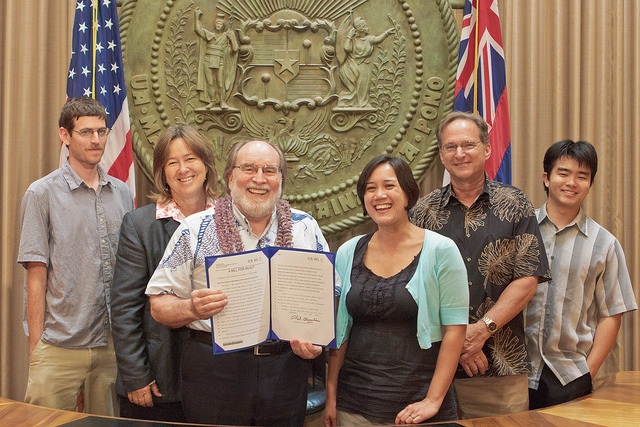
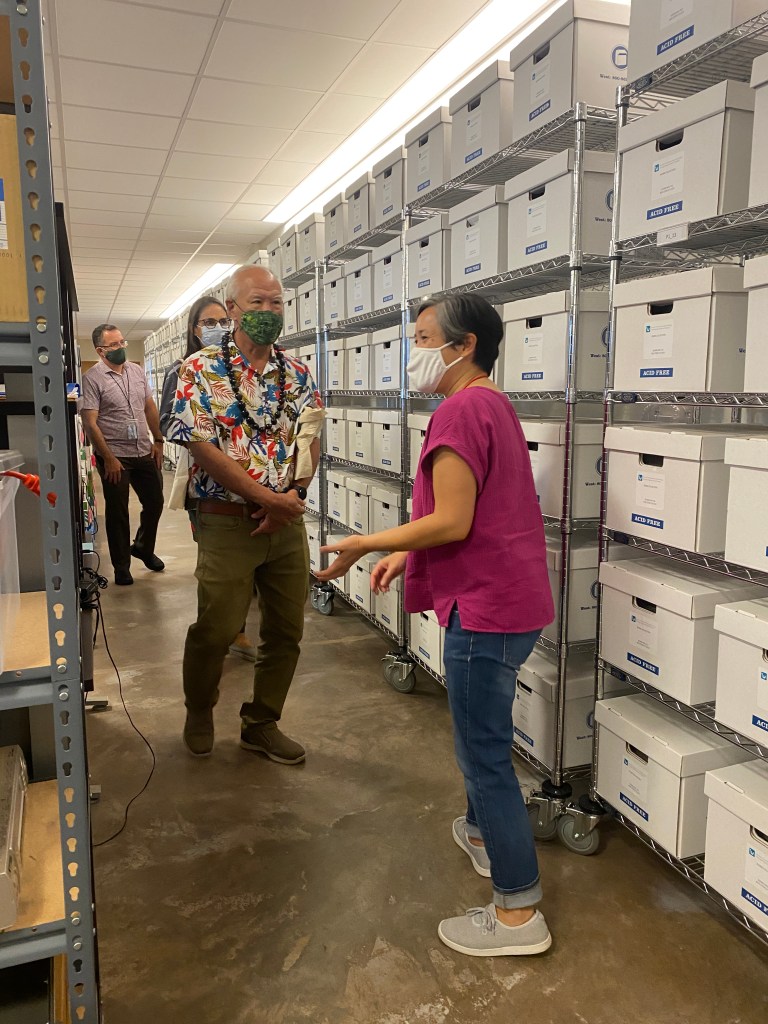
Head Archivist, Janel, gives State House Representative Gregg Takayama a tour of the ʻUluʻulu facilities.
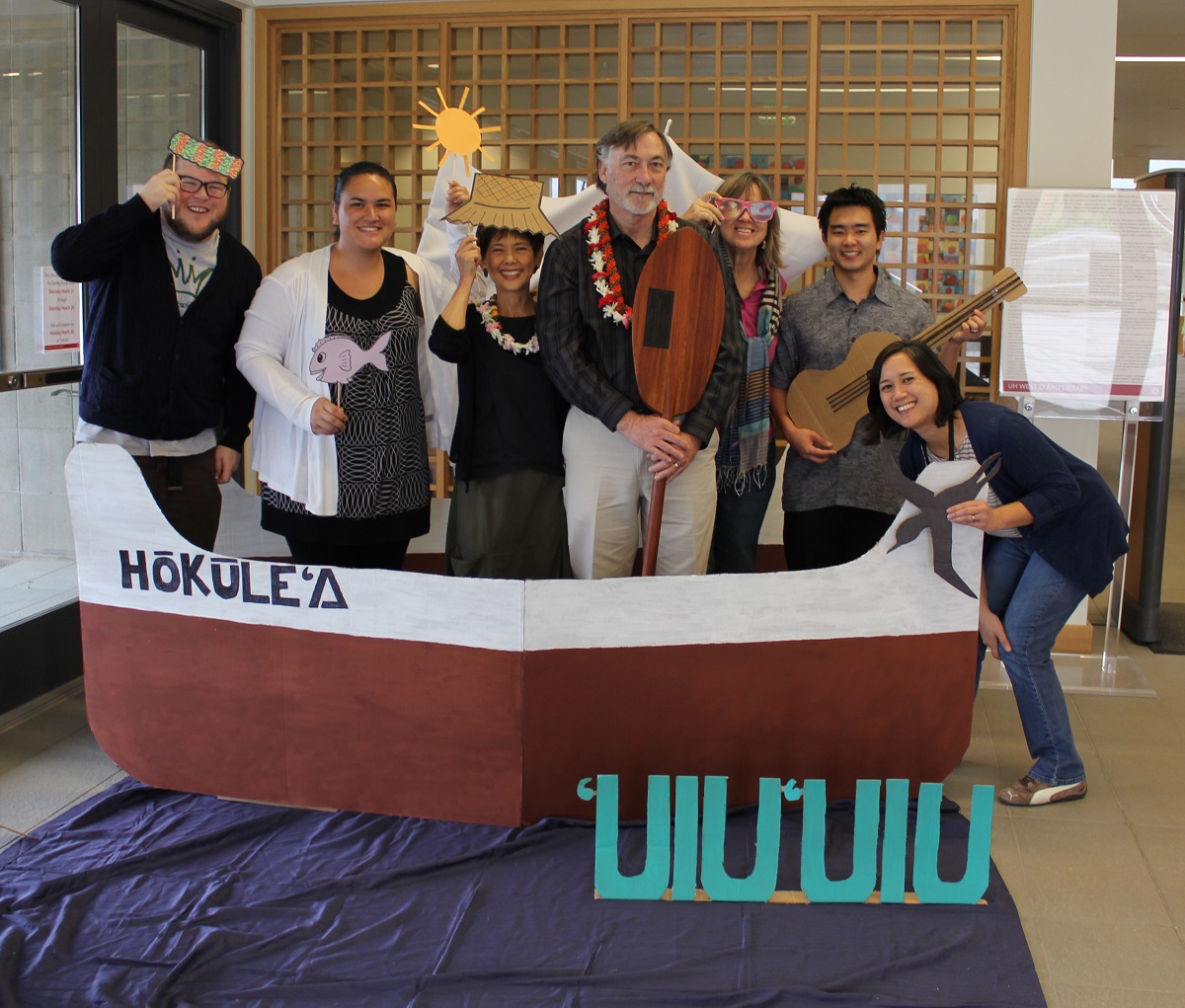
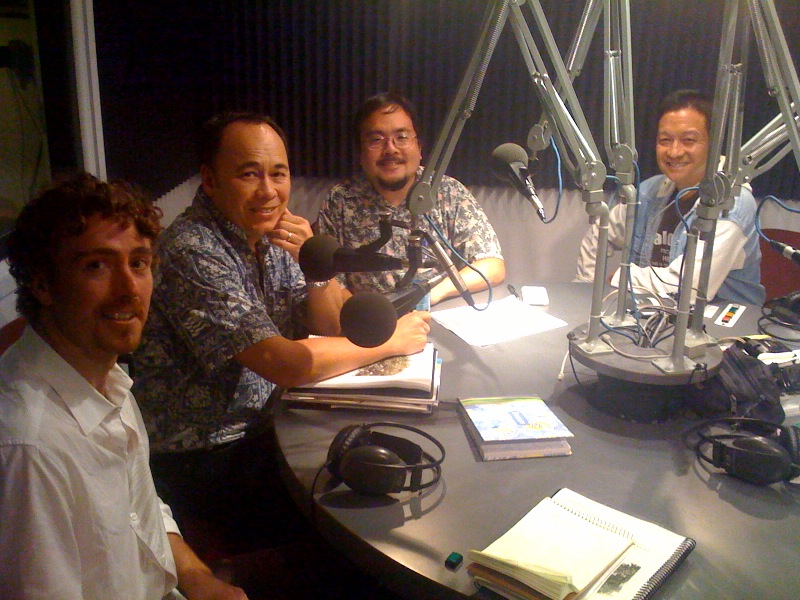
‘Ulu‘ulu and Academy for Creative Media Staff
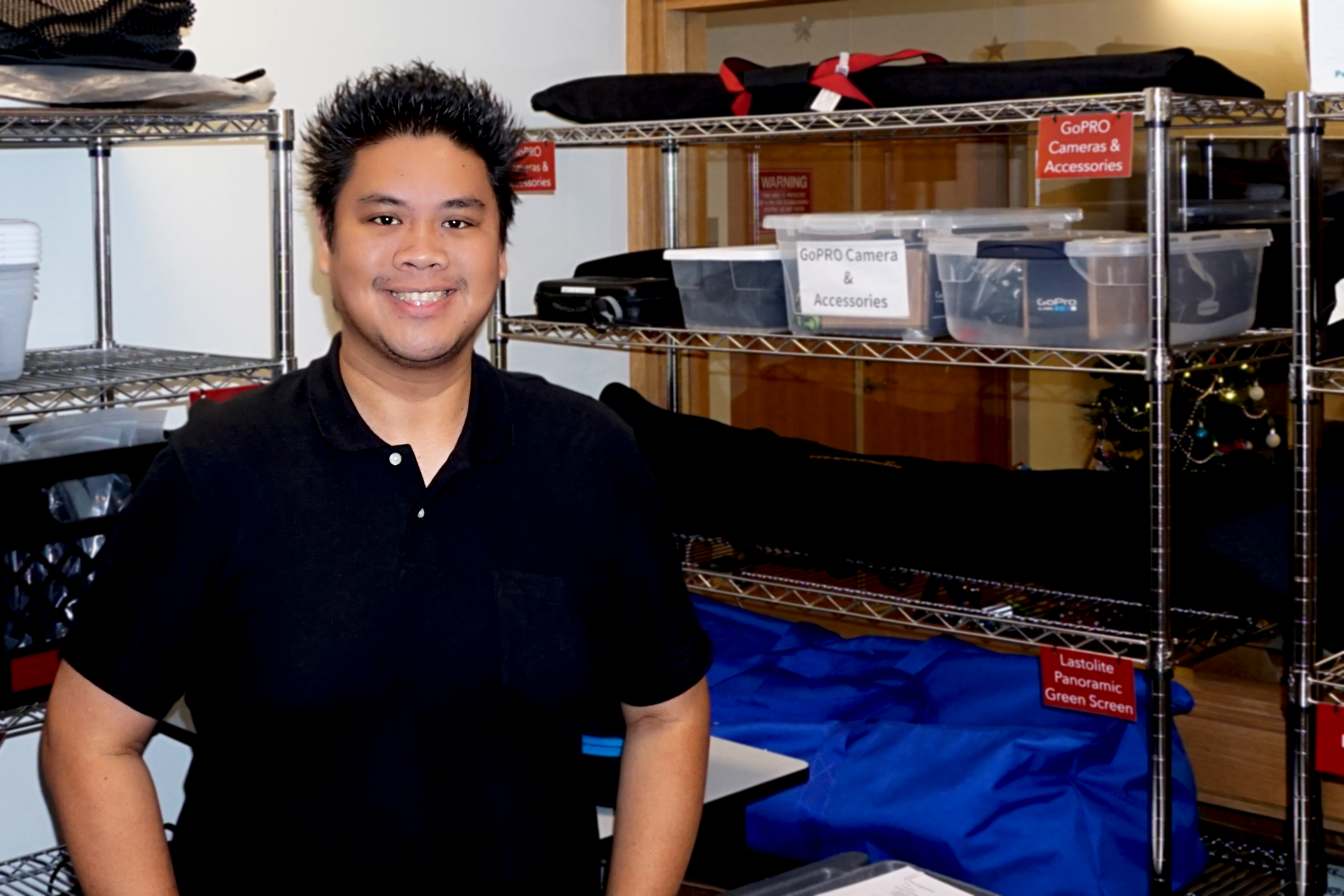
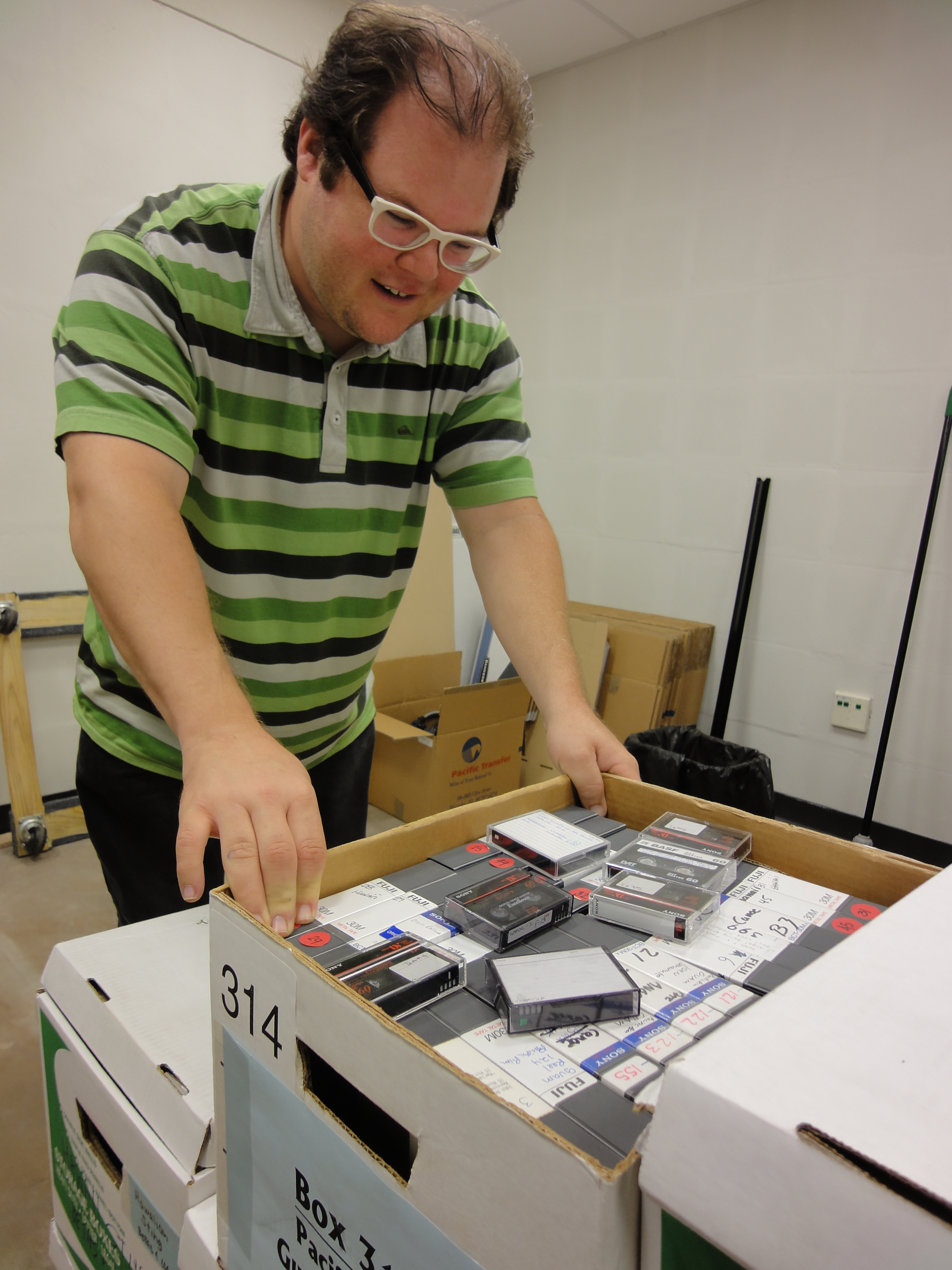
Zach in front of the digital video rack
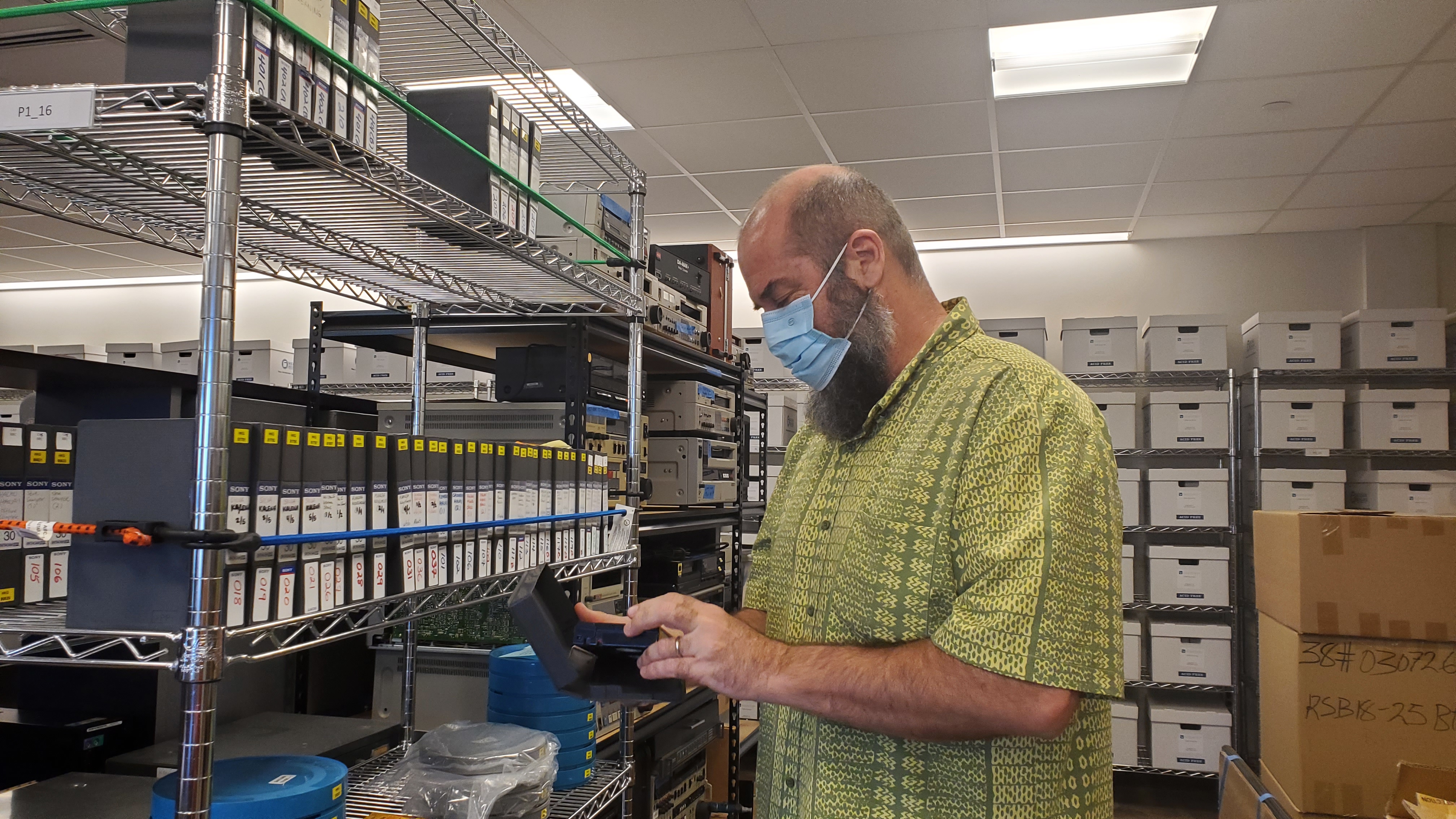
Making sure videos are in their proper location in the vault
Roselani Media Preservation Intern Sarah Smith
Sage Kaonohi, Spring 2016 Intern
Letitia Lavoie, ‘Ulu’ulu Intern
Roselani Media Preservation Intern April Rodriguez
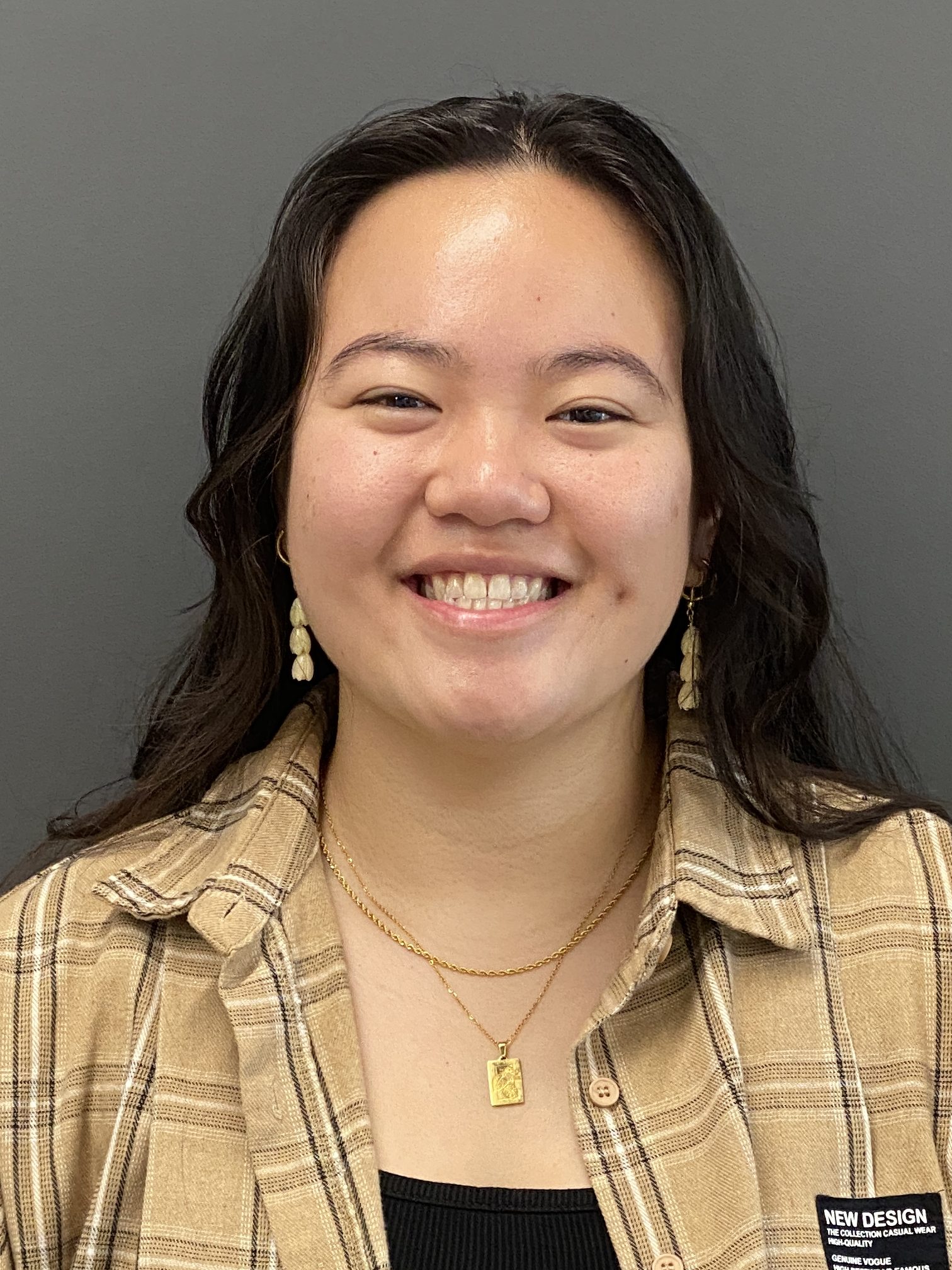
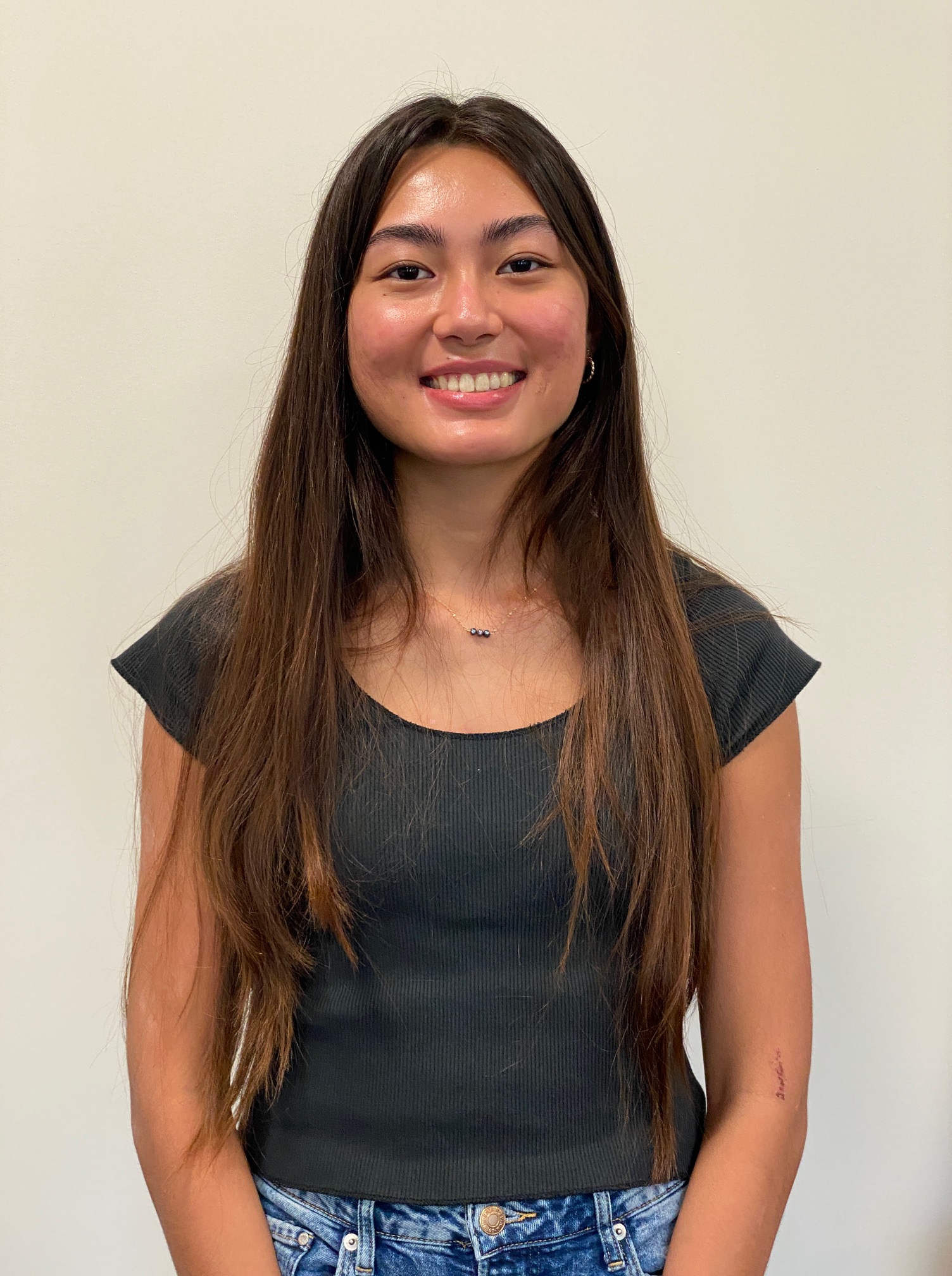
It’s that time of year again! We are excited for you to get to know our newest Roselani Summer Intern for 2023, Ani Kawada! Ani’s Roselani Internship is taking place in conjunction with her Association for Moving Image Archives (AMIA) Pathways Fellowship. ʻUluʻulu is thrilled to have Ani for a total of ten weeks. We did our usual introductory interview with Ani, read on to learn about our great, new addition to the team.
My name is Ani Kawada and I am from Ewa Beach, Oʻahu. Some things about me are that I love to read, play volleyball, and drink coffee. I got my bachelor’s degree in History and American Studies from the University of Hawaiʻi at Mānoa. I am currently going into my second year in the dual master’s program for American Studies and Library and Information Science. Some things that I am interested in are Hawaiian and Indigenous studies, as well as the curation, preservation, and ethics of Hawaiian knowledge in galleries, libraries, archives, and museum or GLAM institutions.
What brought you here to ‘Ulu‘ulu? What are some of the things you’re hoping to learn during your internship with us?
I first heard about ʻUluʻulu through my Society of American Archivists (SAA) Student Chapter President, Kate Marsi, who also interned with ʻUluʻulu. I then did some research in the types of materials ʻUluʻulu holds and preserves, when researching for one of my Library and Information Science (LIS) classes. I then went into a rabbit hole, looking through all the different videos and collections that ʻUluʻulu had to offer. I was happy to hear that an internship was going to be offered in the summer, and decided to go for it.
Some things that I hope to learn during this internship is how to preserve the physical moving image archive, such as the film, vhs, betamax, and more. I am also interested in the digitization process.
What projects are you working on at ‘Ulu‘ulu?
I am currently working on quality control and technical descriptions for a few collections, such as the Don Ho collection, Juniroa Productions/ KGMB, CLEAR collection, and hopefully the Nā Maka o Ka ʻĀina collection. I am also doing some transcription work for the KGMB Electronic News Gathering (ENG) log sheets and viddler video streaming maintenence. I have also finished transcribing several videos for the Pau Hana Years Collection and am now moving forward to turning those transcriptions into captions. Finally, I am cataloging and doing description for several collections. So far I have finished the Pacific Islanders in Communication’s sub-collection, Happy Birthday Tūtū Ruth, as well as the Juniroa – edited masters. I am currently working on doing cataloging and descriptions for several Hawaiʻi Home Movies.
Is there anything about the items you are working with that is surprising or unexpected?
I have found the Don Ho Collection to be one of the more surprising/unexpected collections to work through. First off, before working on this collection, I had zero prior knowledge about the Don Ho Show. So I was quite surprised at the content of the show once I started watching it. Many of the things that went on the show were a little risqué. I often find myself gasping and sometimes laughing at work due to the type of humor displayed. It has been quite an interesting experience, for sure.
Now that you’ve been at the archive for a little while, have you found a favorite aspect?
I actually do enjoy every project that I am a part of. They are all different in their own way and have pros and cons to all of them. I would have to say that I do enjoy working on the transcription and captioning for the Pau Hana Years, because that is the collection that got me interested in ʻUluʻulu in the first place. I was also able to practice some of my ʻōlelo Hawaiʻi, since some kūpuna in the videos were speaking ʻōlelo.
Do you have any advice for future ‘Ulu’ulu interns or fellows?
Some advice I have for future ʻUluʻulu interns or fellows is to not be afraid to ask questions, especially if this is your first time working in an archive or with moving images. Everyone in ʻUluʻulu is so welcoming and excited to have you there and are more than willing to help you wherever needed.
Thank you to Ani for sharing your experience with us. We look forward to continuing our work together with you and we are so happy to have you along with us as the Roselani Summer Intern!
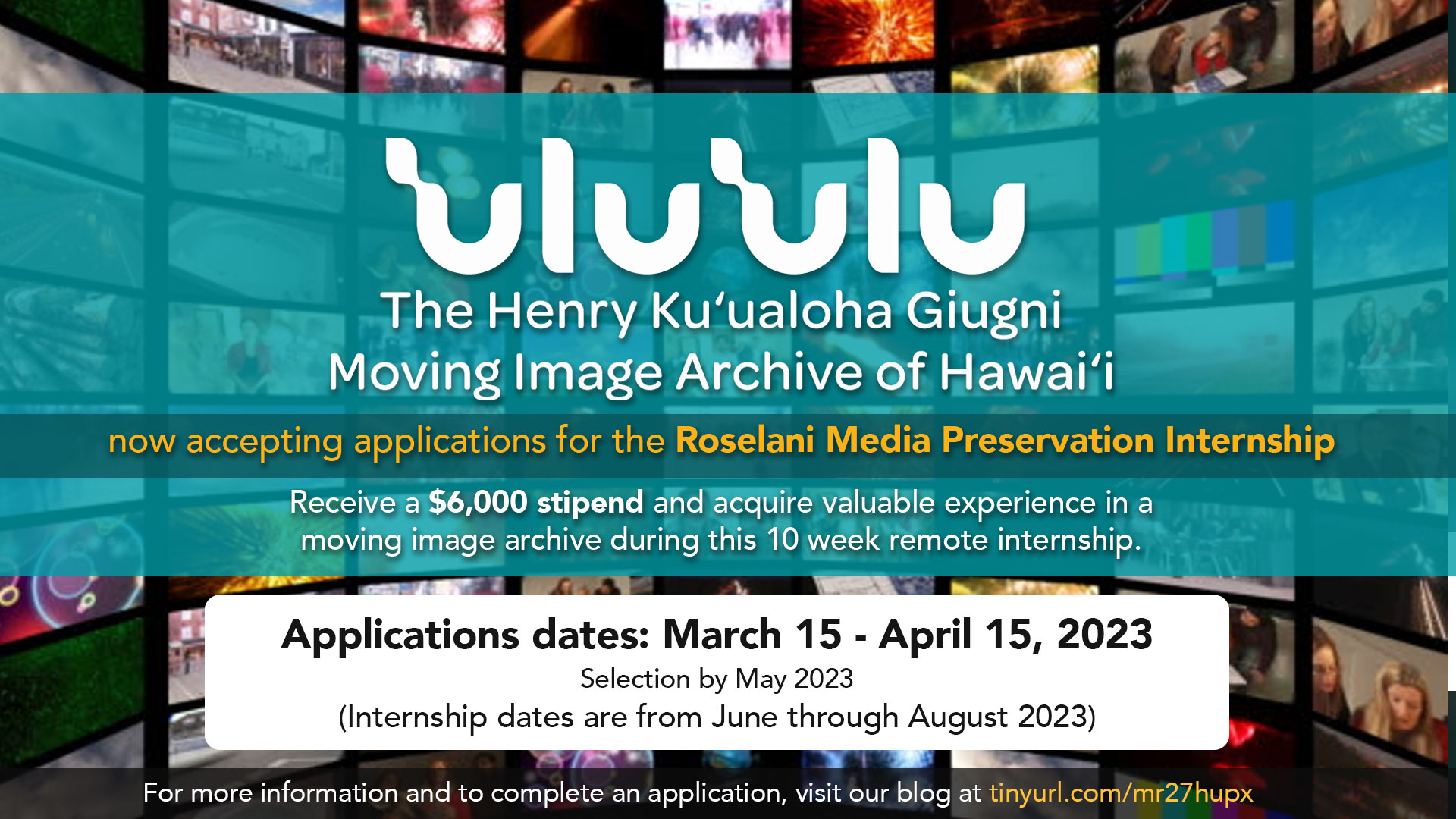
Through the generous support of the Henry Ku‘ualoha & Muriel Roselani Giugni Fund of the Hawai‘i Community Foundation, the Roselani Media Preservation Internship is offered each year at ‘Ulu‘ulu to give a student of merit who is committed to the preservation of our media history the opportunity to acquire practical experience in a moving image archive.
To be eligible for the Internship and Fellowship, applicant must also apply for the AMIA Pathways Fellowship: https://amia.link/APFApplication
The student selected as the 2023 Roselani Intern must be committed to the preservation of our media history and enrolled in or a recent graduate of a moving image or archival academic program. Working remotely, but virtually side-by-side with experienced archivists, the intern will gain practical experience in a moving image archive.
ʻUluʻulu has been brimming with interns lately! We are lucky that this Spring Semester we have both Kimo and now, our first Library and Information Sciences intern in several years, Kate Marsi! We’re doing our usual welcome interview with Kate a little late in the semester, but we still have a few months left with her and still want you to know about her. Read more about Kate’s experience with us, below.
Tell us a little about yourself, Kate.
I am currently in my second year of the LIS program, and am studying in the archives and special collections pathway. Before entering the University of Hawaiʻi at Mānoa Library and Information Sciences program, I received my BA in East Asian Humanities from San Francisco State University and worked in education in the states of California and Washington. I am the student assistant du jour with the Jean Charlot Collection at Hamilton Library, and I aspire to continue to work in art libraries, museum archives, and other special collections after graduating from the program. I read ravenously, adore cinema, traveling, and fashion. I enjoy cooking and hosting dinner parties, and occasionally rec dive with my husband.
What brought you here to ‘Ulu‘ulu? What are some of the things you’re hoping to learn during your internship with us?
I took the course, “Moving Image Archives”, that Janel taught over the summer, and it left me wanting to learn more and take on some hands-on experience of working with film processing and preservation. I am hoping to learn more about handling and processing film, as well as how moving image archives systems differ from more “traditional” archives.
What projects are you working on at ‘Ulu‘ulu?
I am currently doing a good deal of work with the Hawaiʻi Home Movies Collection. I have been working on quality control of access files for newly digitized materials, and assisting with inventory, inspection, and condition reporting of two boxes of film from another family that has donated home movies to the collection.
Is there anything about the items you are working with that is surprising or unexpected?
When handling film in person, I was not ready for the realities of degrading film. I have had the pleasure of processing some yucky papers with my work at Jean Charlot, but the smell of vinegar syndrome and film decay was a massive shock. Definitely not a smell I will ever forget. On a less gross-out note, I have enjoyed the unexpected reality of being able to see these vignettes of everyday life in Hawaiʻi while working with the Hawaiʻi Home Movies Collection.
Now that you’ve been at the archive for a little while now, have you found a favorite aspect?
I have really enjoyed processing the Wadsworth collection. It has allowed me to get hands on, and become familiar with the different formats of film and see first hand how to determine a film reel’s condition when it arrives at the archive.
Do you have any advice for future ‘Uluʻulu interns or fellows?
Kate decided to wait on this until she made it further into the semester. We’re counting on her to double back and fill us in. Check back with us, later!
As we announced earlier, our newest team-mate is Kimo Nichols. Kimo is our Public Broadcasting Preservation Fellow. We’ve asked Kimo to fill out our introductory interview so you all get to know him a little better. Dive in below!
I grew up on Oʻahu, attended local public schools and graduated from UH-Mānoa with a B.A. in American Studies and a Certificate in Ethnic Studies in 1993. I currently work in the Serials Department at Hamilton Library and am now working on my MLIS degree. In my spare time, I do a reggae show on KTUH FM and enjoy collecting vinyl, listening to music, watching football, hiking and spending time with my family.
What brought you here to ‘Ulu‘ulu? What are some of the things you’re hoping to learn during your internship with us?
I’ve been interested in audio/visual related archives for a while now and had the great fortune to previously work in one at UH-Manoa: The Wong Audiovisual Center located at the former Sinclair Library. I was brought to ʻUluʻulu through the University of Hawaiʻi at Mānoa’s MLIS program, where I learned about the Public Broadcasting Preservation Fellowship that was available through the American Archive of Public Broadcasting. I was extremely fortunate to be awarded a fellowship for the current academic year and placed at ‘Uluʻulu to serve my internship.
While at ‘Uluʻulu I look forward to learning as much as I can about video digitization and archival descriptive cataloging practices.
What projects are you working on at ‘Ulu‘ulu?
At the moment, I am working on digitizing and writing cataloging metadata descriptions for raw video footage of episodes in the Biography Hawaii series. So far I have digitized Betacam SP tapes and written metadata for episodes focusing on kumu hula Maʻiki Aiu Lake and union/civil rights attorney Harriet Bouslog.
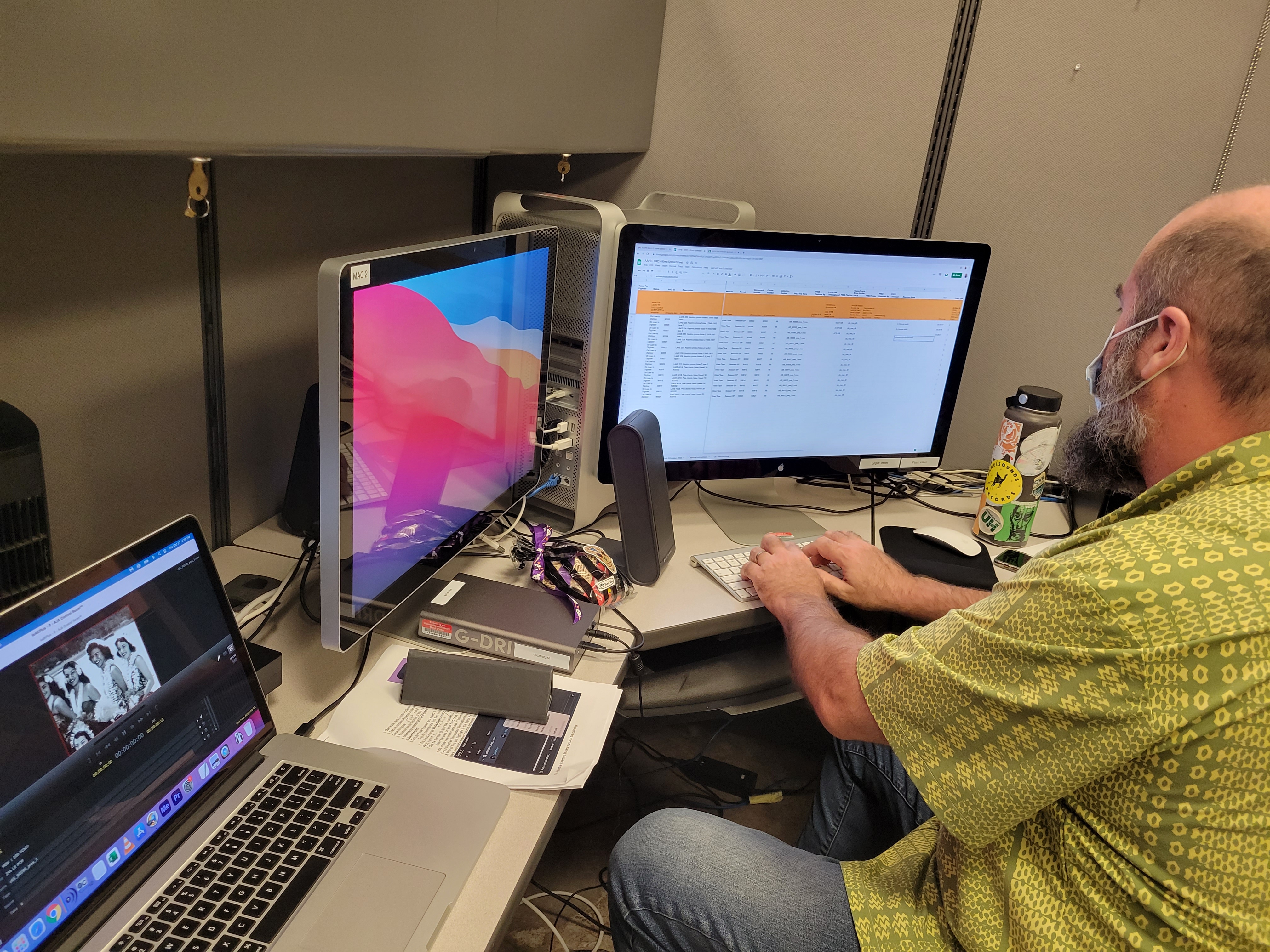
Kimo reviewing tapes from the Biographical Research Center Collection.
Is there anything about the items you are working with that is surprising or unexpected?
Actually, quite a lot of what I’m working on has been unexpected, due mostly to my own ignorance of the historical subject matter. I had never heard of Harriet Bouslog before working with the Biography Hawaii footage, let alone Hawaiʻi labor movement icon Ah Quon McElrath, the main interview source for the episodes on Bouslog. Similarly, although I have a bit more knowledge on the subject of hula, the many hours of footage and interviews I’ve digitized on the life and impact of Maʻiki Aiu Lake have been completely revelatory. Getting to hear the expertise and candor of hula and Hawaiian cultural authorities such as Robert Cazimero, Kalena Silva and Puakea Nogelmeier reminisce about Maʻiki and break down her hallowed place in the Hawaiian renaissance has been both fascinating and entertaining.
Now that you’ve been at the archive for a little while now, have you found a favorite aspect?
Apart from being fortunate enough to benefit daily from the kindness, patience and amazing expertise of the staff, I’d say my favorite aspect of interning at ʻUluʻulu is being able to soak up as much as I can of all the incredible stories, history and images available in its archives. I’m being allowed to work with materials that really broaden and further my perspective of Hawaiʻi and its peoples .
Kimo hard at work in the digitizing lab.
Do you have any advice for future ‘Uluʻulu interns or fellows?
My advice would be to really just soak it all in and enjoy every moment of the learning experience. I think that if future interns keep an open mind, love learning and show respect to the materials, interning at ‘Uluʻulu is an incredibly rewarding opportunity to work with an amazing group of people all committed to helping make sure Hawaiʻi’s story is told through the preservation of moving images.
This summer we are excited to welcome our first Roselani Intern in two years, Lily Lubin. Lily’s Roselani Internship is taking place in conjunction with her Association for Moving Image Archives (AMIA) Pathways Fellowship. ʻUluʻulu is lucky to be working with Lily for a total of ten weeks for her remote internship and fellowship. Read our introductory interview with Lily, below!
Lily Lubin, Roselani Intern and AMIA Pathways Fellow 2022.
Tell us a little bit about your background and how you got into this field of work, Lily.
A little background on me! My full name is Elizabeth, but I’ve always gone by Lily — although it’s a little unclear how that nickname came to be.
I was adopted from China as a baby and raised on Martha’s Vineyard in Massachusetts. In the summers, my dad and I would often go birdwatching or collect butterflies and insects and my interests in preservation stemmed from his. As I grew older, I started to notice the absence of certain things — the familiar call of the whippoorwill or luna moths that would gather on the screen door– and my curiosity grew.
I went to Emerson College as an undergraduate, where I got a degree in screenwriting with minors in comedy and music history. When I was working in production or recording studios, I realized that I most enjoyed projects that related to cataloging or organizing sessionography. The media archives track at UCLA was the perfect opportunity to combine my interests in film and preservation and I hope that I can offer a more emphatic view on materials where others may not.
Other things! I like to think I’m funny so I make a lot of jokes, whether they land or not.
In my spare time I like to hang out with my cat. I also love to read and listen to music — my record and book collections are constantly growing and I am always open to suggestions! I don’t have a lot of fun facts for myself, but I like to give fun facts, for instance, did you know that John Lennon helped write, and also sang backup vocals on, the David Bowie song “Fame”?
What brought you here to ‘Ulu‘ulu? What are some of the things you’re hoping to learn during your internship with us?
I discovered ‘Ulu‘ulu and the Roselani Media Preservation internship through UCLA, where I am currently pursuing my masters in Library and Information Sciences and hope to pursue a profession in media archiving.
During my internship, I hope to learn more about how an archive runs in real life and the intricacies of working in an archive that focuses on the preservation of cultural and historical materials.
What projects are you working on at ‘Ulu‘ulu?
I have multiple projects that I am working on simultaneously, which I really enjoy because it covers so many different aspects of archiving – and more specifically media archiving – that I have been learning in my courses at UCLA.
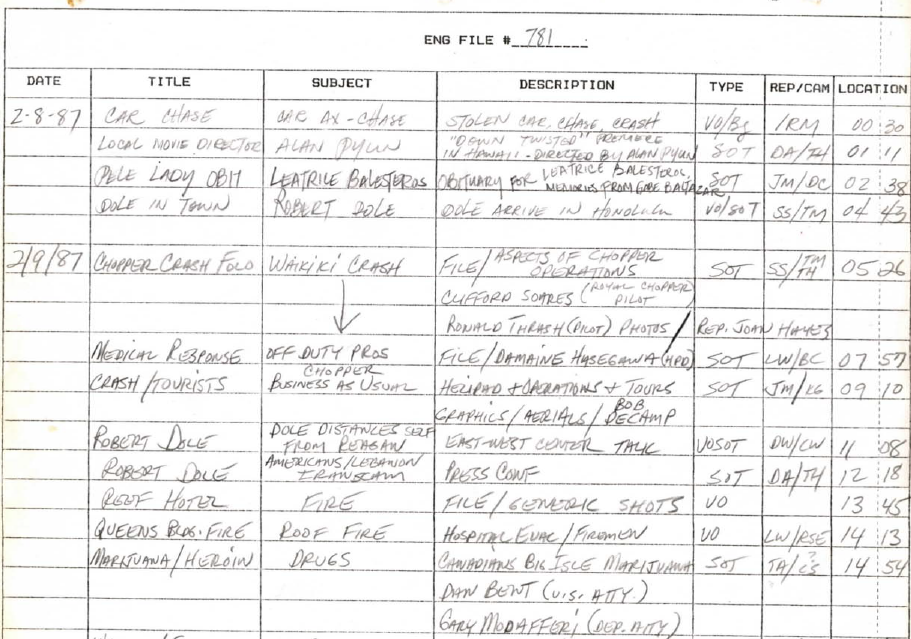
For instance, a couple of my projects involve creating enhanced/detailed descriptions for digitized footage from Juniroa Productions and KGMB ENG news. This project allows me to be creative in determining what information is key for a researcher or archivist when it comes to discovery and access. Similar to this, I have a project that involves transcribing handwritten ENG news log sheets.
One of the Electronic News Gathering Log Pages Lily is transcribing.
Another project I have is creating captions for clips from the Pau Hana Years for the ‘Ulu‘ulu website – this project was especially fun because there was such a wide range of topics that are covered and so many creative and interesting people featured that I would never have come across otherwise!
Lastly, I have a project which involves checking the quality of the footage once it has been digitized. While I am waiting to start this project, I look forward to it because it is one of the more technical sides to media preservation.
Is there anything about the items you are working with that is surprising or unexpected?
Something unexpected about the items I’ve worked on is how meticulously the log sheets and ENG footage were kept before coming to the archive. It’s really cool that someone had the foresight to keep the paper log sheets because it’s a really helpful tool for providing metadata and information that might otherwise be lost to the world.
Now that you’ve been at the archive for a little while now, have you found a favorite aspect?
One of my favorite aspects has been watching footage from the 70s and 80s. I wasn’t incredibly familiar with Hawaiian history before entering this internship and I’ve learned a lot about what life was like at that time.
Do you have any advice for future ‘Ulu‘ulu Interns?
Don’t be afraid to look things up! There are times when I just can’t quite figure out what someone is saying or what is written, so I’ll search for it online. It’s amazing and scary how much is on the internet, but it’s a useful tool to ensure that there are as few blanks as possible. It’s a win-win on both ends because the work will be more accurate and you always learn something new.
Please tell us a joke!
One of my favorite knee slappers is a fruit related joke:
One fruit said to the another “I can’t elope”
To which the other said, “but honey do!”
Thank you, Lily for sharing so much with us!
Through the generous support of the Henry Ku‘ualoha & Muriel Roselani Giugni Fund of the Hawai‘i Community Foundation, the Roselani Media Preservation Internship is offered each year at ‘Ulu‘ulu to give a student of merit who is committed to the preservation of our media history the opportunity to acquire practical experience in a moving image archive.
Please help us give a warm welcome to our first in-person intern in over two years, Jon Snyder! Jon has already been with us for about five weeks, but he has several more weeks to go and we would love to introduce him to you. He has agreed to do a brief interview with us to share a little bit about himself and his time with us so far. Welcome Jon! We’re happy to have you!
My name is Jon Snyder, I am pursuing my Bachelors Degree in English here at The University of Hawai’i West Oahu. I am the perfect example of that old saying “Jack of all trades, master of none,” as I have held many different jobs and hobbies. I enjoy attempting to create music and playing with sound editors. I also have a small book collection of about 400 books. At different points in my life I have been a courier for a local mortuary, a sign maker, and member of a punk band that opened for Blink-182 at the Blaisdell arena. Most recently I have been working at the Leeward Community College Library as a Reference Student Assistant.
What brought you here to ‘Ulu‘ulu? What are some of the things you’re hoping to learn during your internship with us?
The idea of doing an internship with an archive was planted in my mind when I began classes at UHWO in 2016 by Dr. Brenda Machosky. Through our conversations after class she realized that with my personal experiences and academic work ethic, that I would be a perfect match for something like this. When it came time to begin looking for an internship for the practicum, I wanted to find something that was not only interesting, but also on campus. ‘Ulu’ulu was the first and obvious choice. Aside from learning how an archive functions and what its purpose is, I would like to see how an archive, such as this one, can not only help to preserve the past but also service the future.
What projects are you working on at ‘Ulu‘ulu?
I have been working with Hōkū and just finished creating the preliminary inventory for the films and tapes that have come in for the 100th Infantry Battalion. I have also been involved with preparing ʻUluʻulu video clips for website migration with Robbie. Both projects are interesting in their own ways. For me, it is interesting to see how a collection is handled at the beginning phase of its inclusion to the collections here. The interesting part of the website clip migration has been seeing the clips from the past. At times I have to stop myself from trying to see where the clip might be from and seeing how the location has changed over time.
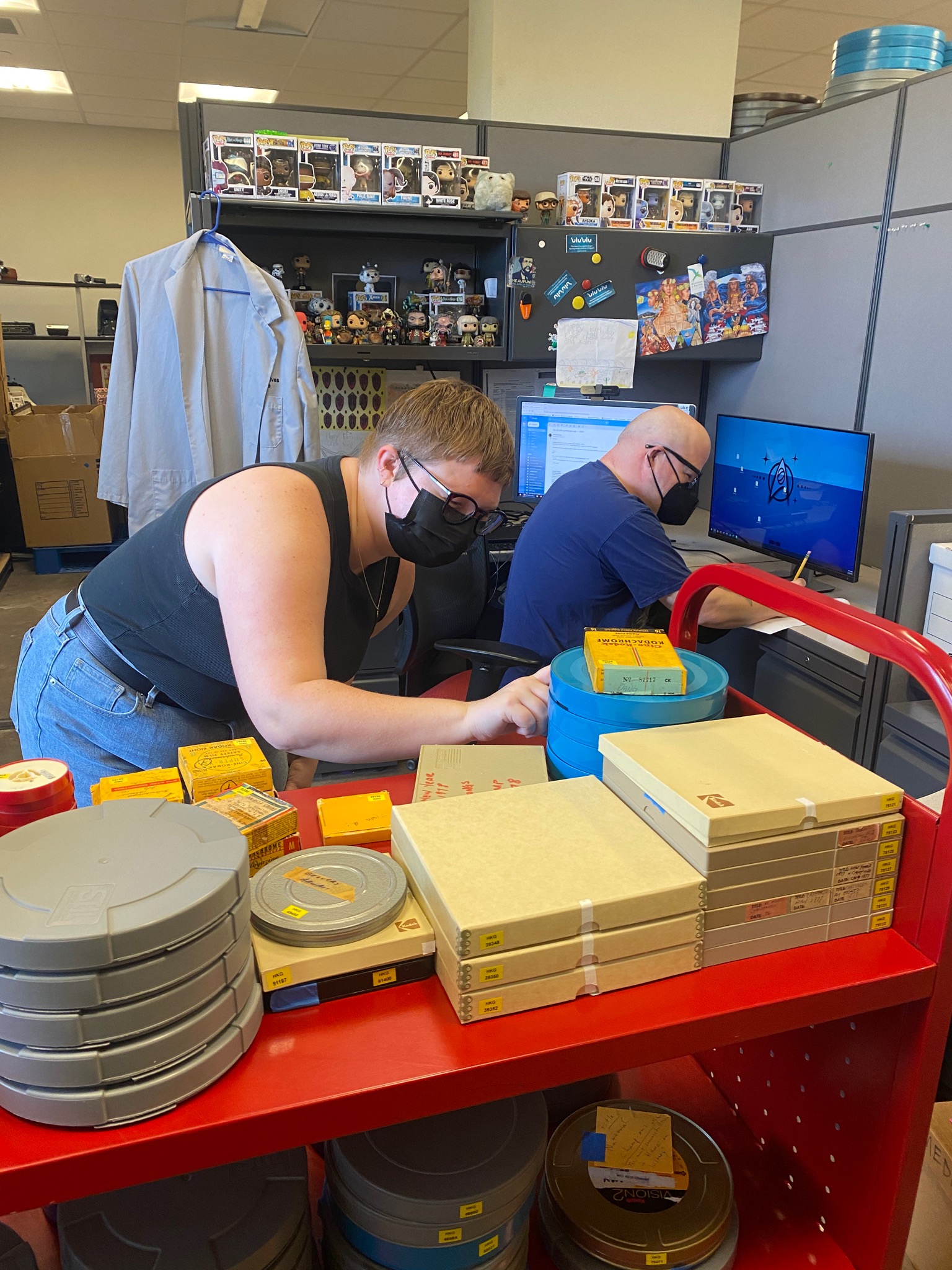
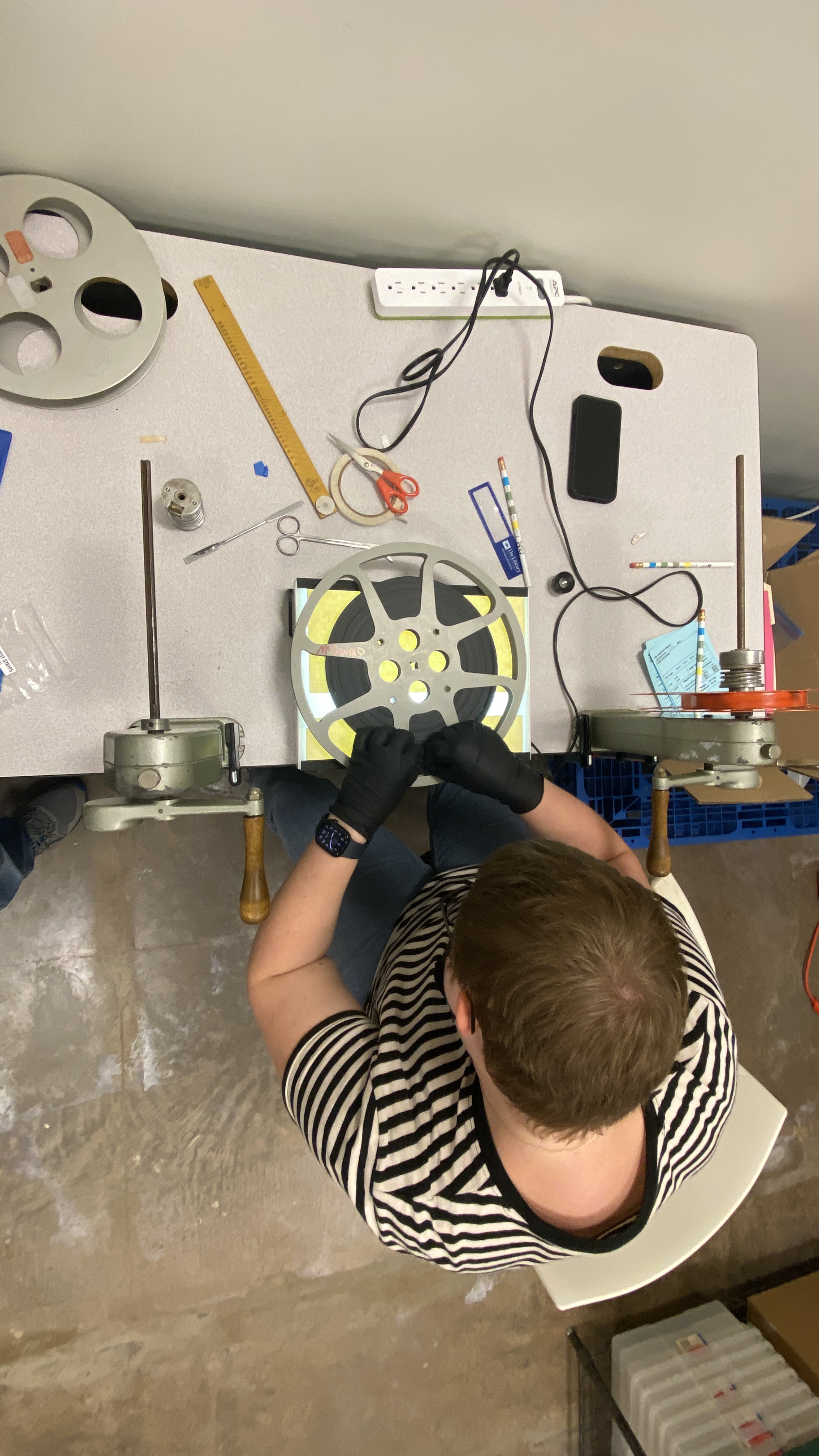
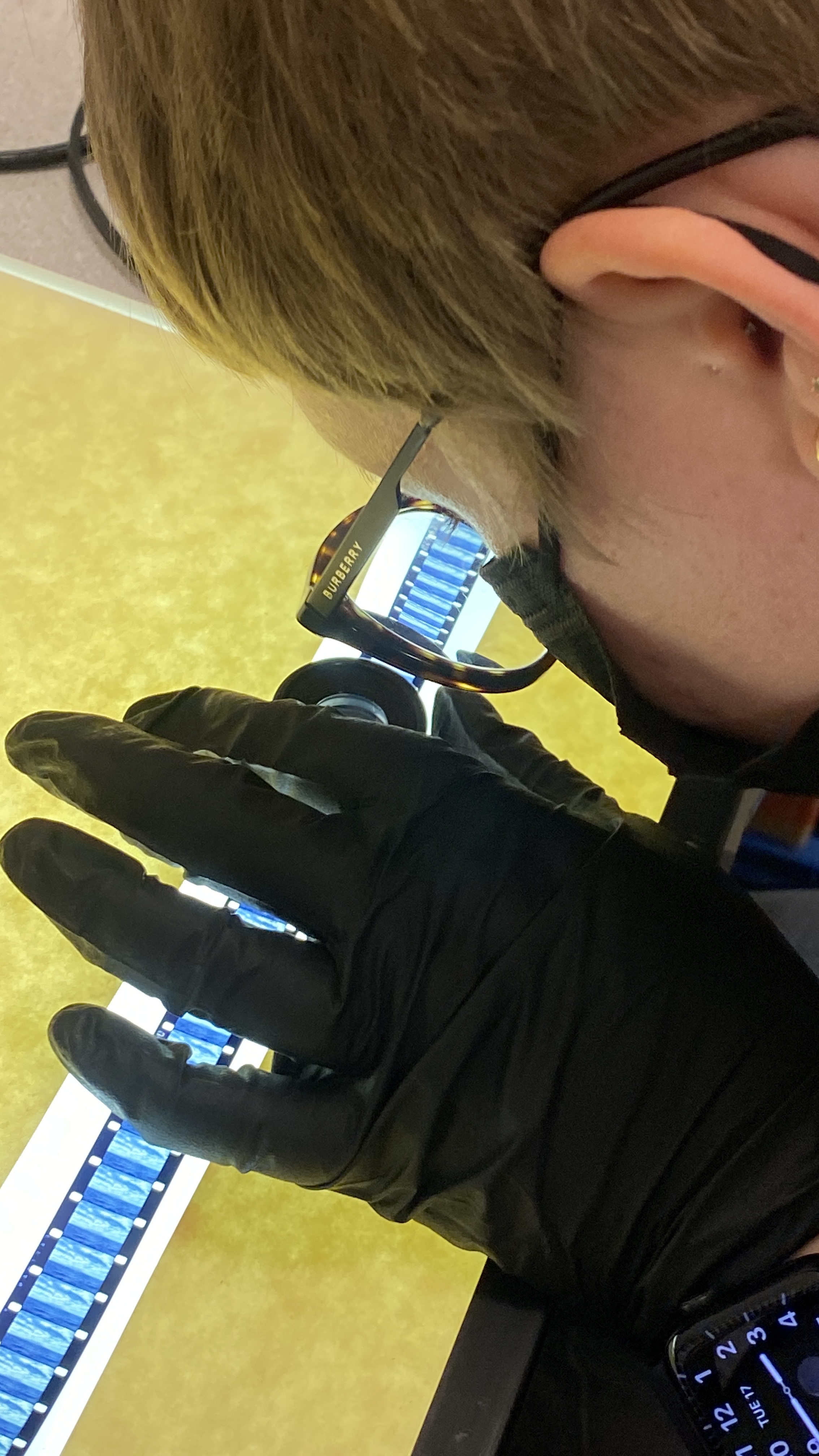
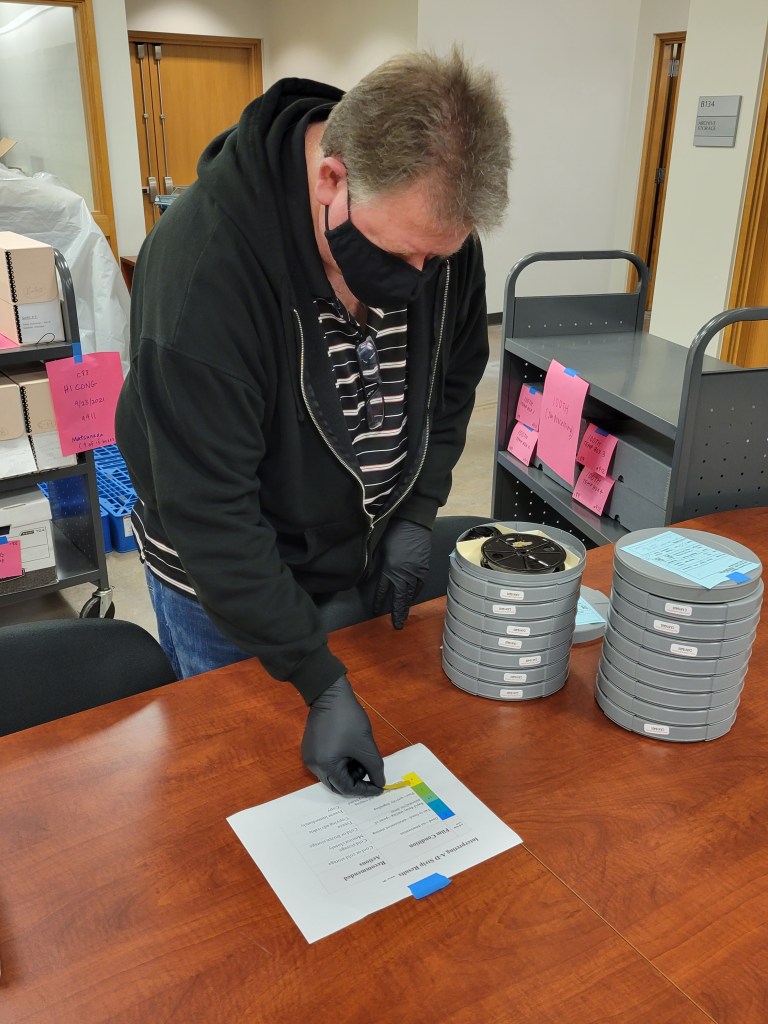
Jon matches an AD test strip against the results chart to check the acidity of a film reel. And is tested on his AV format knowledge by Hōkū.
Is there anything about the items you are working with that is surprising or unexpected?
One aspect that surprised me was how much has to be done to a film or tape before a student or a researcher might even see it. It is not like archives are depicted in movies where someone just walks into the space and begins rummaging around. Everything has a name, number, and location. I really think working at Leewardʻs library has been an advantage for me in understanding how this aspect of an archive works.
One unexpected thing actually happened the other day. While I was being shown how to examine film that has been donated, we noticed that this particular film had sound on it. I remarked that the sound resembled what a waveform looks like on a computer. To my surprise, I was told that that is pretty much exactly what it is. A lot of little things from my personal interests have seemed to find a use while I am here. I really enjoy learning by doing, and thankfully everyone here has trusted me with being hands on.
Now, that you’ve been at the archive for a few weeks have you found a favorite aspect?
I think the thing that I like the most is that there does not seem to be a ton of pressure in the process, even though I know that everyplace has their own deadlines to meet. The preservation process can be time consuming, but since the focus is on making sure that what is coming in is usable and can eventually be digitized, it is understood why some things may take longer than others. I really like the emphasis on preservation here. It is almost the same reason why I like libraries. If you think of every book in a library as being an idea, the library is sort of a repository for ideas. That same feeling is present here at ʻUluʻulu, except the medium being preserved involves moving images. In both examples, the people working at a library and at this archive are working toward a common goal of preserving the past in order to inform the future.
Do you have any advice for future ‘Ulu’ulu Interns?
Since being a Humanities intern is not so typical for ʻUluʻulu, I would say that it is important to approach anything and everything with an open mind. I have found that even though my major is not typically associated with this kind of work, there is still a lot that I can relate from my schooling to this kind of archival work. If I had to use an analogy I would say, just try to be like a dry sponge and soak up all you can. You never know what may influence your direction in life.
ʻUluʻulu is saying goodbye to our project assistant, Sidney Louie. After three years and graduating from the University of Hawaiʻi at Mānoa with her masters degree in Library and Information Science she will be moving to the Honolulu Museum of Art as their archivist. We asked Sidney to do a quick interview with us before she headed out on her last day.
How did you learn about ‘Ulu‘ulu and why did you decide to work here?
When I left my longtime job in media, I thought about my next career steps. I listed the things that made me happy, and on top of that list were film and libraries. I heard about ‘Ulu‘ulu Moving Image Archive among my peers in the media industry, but I did not fathom the scope and depth of the collections. My first visit to the archive was in Spring 2018, where I met up with Heather, Janel, Robbie, and Koa. Heather showed me the collection vault, which pretty much won me over. Janel told me that she was teaching a moving image archive course at the University of Hawaiʻi at Mānoa (UHM) that fall semester. Soon afterwards, I enrolled in the Library and Information Science program at UHM, jumped on the archives track, and took Janel’s excellent class. A year later, the OHA project assistant job opened, and I bolted on the opportunity to work here.
Could you share a little about the work you did at ‘Ulu’ulu?
I worked on a digitization project supported by the Office of Hawaiian Affairs (OHA) in partnership with OHA’s Papakilo Database. The digital content consists of television programs that focus on Hawaiian history, arts, and culture: “The Best of Treasures,” “Holo Mai Pele,” “Legacy of Light,” “Merrie Monarch Festival,” and “Pau Hana Years.” We accessioned, digitized, described, and made accessible 521 video tapes containing 224 hours of audiovisual recordings. I also worked on a few other side projects: helped Hōkū process incoming collections, wrote grants with Janel, and formatted transcripts for closed captioning.
Was there anything about the videos you worked with that was surprising or unexpected?
I appreciate seeing the raw footage of two or more cameras on a particular scene. You can view quite a few of them in “Holo Mai Pele” from the Pacific Islanders in Communications collection. I enjoy seeing different angles and vantage points of the same scene. It helps me think about looking at an object with a different perspective.
You’ve recently graduated from the Library and Information Sciences program at UH Mānoa, where are you headed now and what will you be doing there?
I will be working as the archivist at the Honolulu Museum of Art, processing and preserving HoMAʻs institutional memory that includes not only the historic building on Beretania Street, but also the Spalding House (formerly The Contemporary Museum) and the Linekona Arts Center. I will also be involved with records management and reference and research services.
Now that you have worked as a Moving Image Archivist, what is your favorite archival media format and why?
Before, now, and forever is film. I was fascinated with 8mm and Super 8 film when I was young. I would watch the 8mm film reels in one of those small projectors in a carrel at the public library. I remember the 16mm films that we watched in elementary school. I also loved 35mm back when I worked at the Hawaiʻi International Film Festival when we hauled those heavy film cans.
Tell us a little about what it was like for the last couple of years working for an AV archive through the pandemic?
I worked from home for about 14 months. Although I prefer working at the archive, I do like watching hours of video footage from home on my comfy reading chair or couch. I also tend do my best writing from home. However, I like to think about different ways of approaching a topic, and I enjoy listening to various points of view from my co-workers, especially when I hit an obstacle. I definitely will miss the camaraderie I have developed with my ʻUluʻulu colleagues.
Do you have any recommendations for movies or TV shows that feature libraries, archives, or archival footage?
I was fascinated by Peter Jackson’s “They Shall Not Grow Old,” seeing how much his technical team worked on not only restoring the archival film footage, but also transforming it through adjustments of speed and light. It’s interesting to see an auteur’s handling of archival footage, which is vastly different from documentary filmmakers who use archival footage to present, argue, or support their own thesis or perspective. Most recently, I am enamored with Questlove’s “Summer of Soul” about the 1969 Harlem Cultural Festival. The music and performances in the archival concert footage, shot by TV producer Hal Tulchin, are uplifting, toe-tapping, and delightful. It is a treasure trove of talent.
Thank you, Sidney, for your wonderful work and friendship. We wish you the best in your next chapter!
The student selected as the 2022 Roselani Intern must be committed to the preservation of our media history and enrolled in or a recent graduate of a moving image or archival academic program. Working remotely, but virtually side-by-side with experienced archivists, the intern will gain practical experience in a moving image archive.
February 1 – March 15: Applications accepted April 15: Selection made May – August: Remote internship takes place over 10 consecutive weeks (30 hours per week)
Well 2021 was some kind of year! There were highs and lows throughout, but Covid-19 aside (if only it could be forever put aside), stories have thrived and human resilience has remained high. Here on the West Side of Oʻahu, ʻUluʻulu staff continued throughout the year to work wonders in preserving, cataloging and archiving Hawaiʻi’s precious films and videotape. We accomplished this through teleworking, which began in 2020, connecting us through the internet and finally moving back into scheduled office days in 2021.
We also welcomed incredible collections from Hawaiʻi residents – and from some who are no longer with us. The late Cal Hirai spent most of his career as a news camera operator and editor before moving on as an independent, producing the Outside Hawaiʻi series; recently departed Robert Liljestrand helped save his parent’s home, known as the Liljestrand House, by creating a foundation that not only preserved his dad’s legacy and that of architect Vladimir Ossipoff but the exceptional film collection created by his dad, Dr. Howard Liljestrand. And thanks to Paula Rath, whose grandparents founded and supported the Palama Settlement, the archive is caring for those treasured moving images.
These new collections are now part of ʻUluʻulu, an archive that keeps growing thanks to the support and inspiration of donors, researchers and funders. We are a unique educational agency that is about our past and our future. About memories that will last lifetimes. About stories that never get old.
We are grateful to you the reader, the supporter, the fan, the donor. Please continue to support ʻUluʻulu! We wish you the best in 2022!
Mayor Rick Blangiardi visits with the ʻUluʻulu staff.
Posing with some of the wonderful Liljestrand collection with Shan Liljestrand.
Receiving the Outside Hawaii Collection from Pauline Sato.
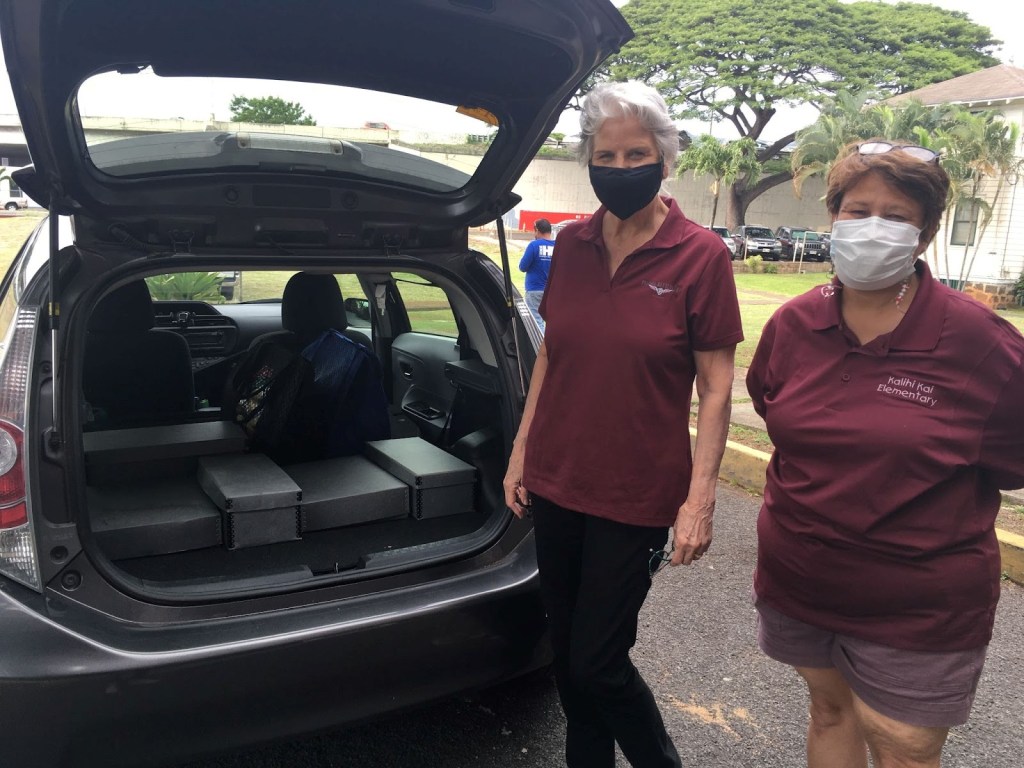
Picking up the “Palama Settlement” collection from Paula Rath and Rebecca Hirakami.
Head Archivist, Janel, gives State House Representative Gregg Takayama a tour of the ʻUluʻulu facilities.






































 ʻUluʻulu: The Henry Kuʻualoha Giugni Moving Image Archive of Hawaiʻi