Tag Archives: Roselani

Thank you and Farewell to Ani!

We’re doing a late post to say thank you and farewell to our Roselani Summer Intern Ani. Ani is well on her way in her most recent semester in the Library and Information Science and Museum Studies Programs, but we miss her dearly. We had her update some questions for an exit interview, to help share her experiences with us as an intern and highlight some of the work being done in ʻUluʻulu.

Could you share a little more about the work you did at ‘Ulu’ulu since we did your last interview? Did your assignments change over the time you were with the archive?

A few things have changed since my last interview. I finished  all of the projects that I was working on so I was given even more projects to work on. I finished doing the quality control and technical descriptions for the Don Ho collection, Juniroa Productions/ KGMB, Clear collection, and I finally got through the Nā Maka o Ka ʻĀina collection. I finished all the KGMB ENG Logs that were originally given to me and the extras I was given after.  As for the Pau Hana Years Collection, I have turned my transcriptions into formatted captions, and finally aligned those captions to the audio with Aegisub. As for the cataloging and description work, I have also finished the Hawaiʻi Home Movies, on top of the Tūtū Ruth collection and the Juniroa/KGMB files. 

You got to work on both transcription and descriptions for various collections; did you have a preference between the two? Why? Was there anything surprising or interesting about working on these aspects of moving image archive work?

This is a super good question and a hard one since I enjoyed both. I enjoyed doing descriptions for videos that included a lot of dialogue, like the Happy Birthday Tūtū Ruth sub-collection. I enjoyed listening to Tūtū Ruth’s insight and also her family’s interviews as well. However, the Hawaiʻi Home Movies on the other hand, were silent. It was interesting to see how Hawaiʻi looked like in the past, but it was still a silent video. As for the transcriptions and captioning, I found it to be very satisfying and full circle that I go to turn the transcriptions into actual captions on the videos.  It was also very interesting to learn what is considered to be ADA compliant for videos and the process of captioning. 
Now that you have worked as a Moving Image Archivist, and have had a chance to work with some different formats, what is your favorite archival media format and why?

This is also a really good question. I honestly feel like I am shifting away from film and more towards betamax, betacam, and ¾” U-Matic, just because those were the main types of media that I was able to work with. Though there were some 16mm and 8mm film that I was able to review. 

Do you have any recommendations for movies or TV shows that feature libraries, archives, or archival footage? Any other last thoughts?

Well one TV show that I want to watch is “For All Mankind.” In one of our many discussions of TV shows and movies, Janel mentioned that she was watching the TV show, “For All Mankind” on Apple TV. The show explores the possibilities of what might have happened or existed if Russia had won the global space race and they used archival footage to adjust the footage of Russia landing on the moon first. I personally haven’t watched the show but it’s on my watchlist. Sadly, I don’t have Apple TV, but if and when I do get it, I look forward to watching that show. 

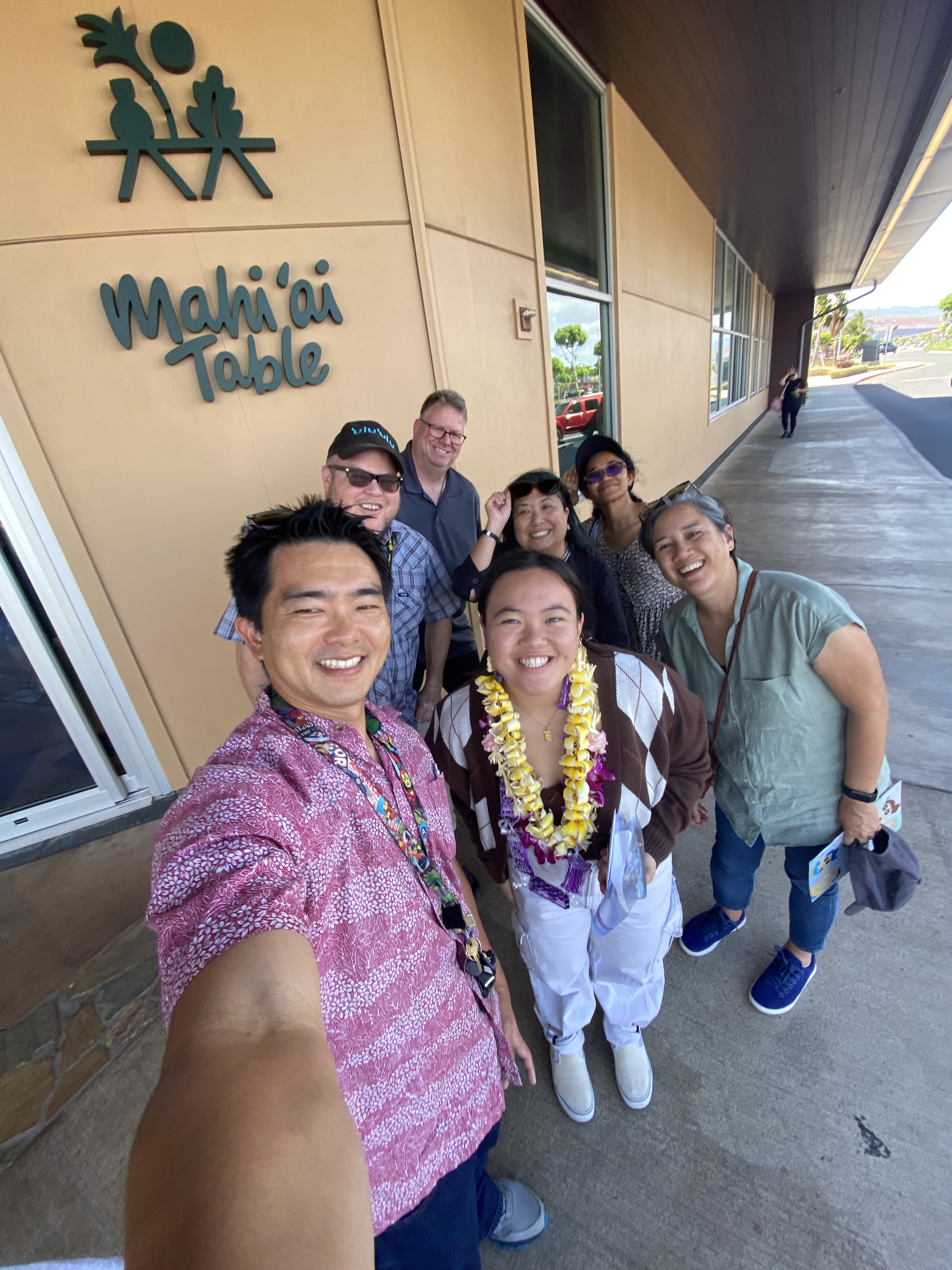
Thank you for your hard work this summer, Ani! We truly appreciated everything you brought to the table, and we loved having an in-person Roselani Intern again!

Through the generous support of the Henry Ku‘ualoha & Muriel Roselani Giugni Fund of the Hawai‘i Community Foundation, the Roselani Media Preservation Internship is offered each year at ‘Ulu‘ulu to give a student of merit who is committed to the preservation of our media history the opportunity to acquire practical experience in a moving image archive. 

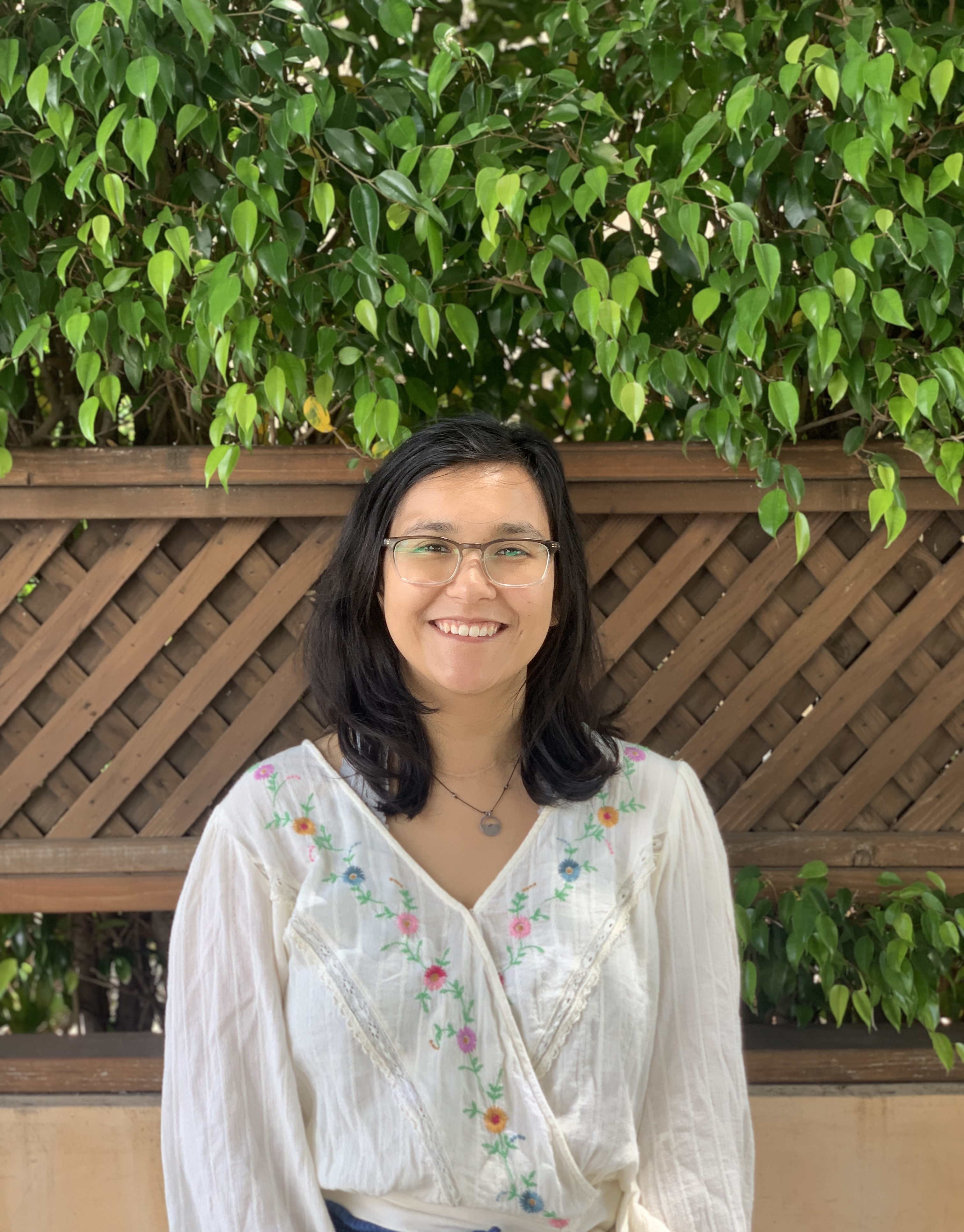
Welcome, Ani Kawada!

It’s that time of year again! We are excited for you to get to know our newest Roselani Summer Intern for 2023, Ani Kawada! Ani’s Roselani Internship is taking place in conjunction with her Association for Moving Image Archives (AMIA) Pathways Fellowship. ʻUluʻulu is thrilled to have Ani for a total of ten weeks. We did our usual introductory interview with Ani, read on to learn about our great, new addition to the team.


My name is Ani Kawada and I am from Ewa Beach, Oʻahu. Some things about me are that I love to read, play volleyball, and drink coffee. I got my bachelor’s degree in History and American Studies from the University of Hawaiʻi at Mānoa. I am currently going into my second year in the dual master’s program for American Studies and Library and Information Science. Some things that I am interested in are Hawaiian and Indigenous studies, as well as the curation, preservation, and ethics of Hawaiian knowledge in galleries, libraries, archives, and museum or GLAM institutions.

What brought you here to ‘Ulu‘ulu? What are some of the things you’re hoping to learn during your internship with us?

I first heard about ʻUluʻulu through my Society of American Archivists (SAA) Student Chapter President, Kate Marsi, who also interned with ʻUluʻulu. I then did some research in the types of materials ʻUluʻulu holds and preserves, when researching for one of my Library and Information Science (LIS) classes. I then went into a rabbit hole, looking through all the different videos and collections that ʻUluʻulu had to offer. I was happy to hear that an internship was going to be offered in the summer, and decided to go for it. 

Some things that I hope to learn during this internship is how to preserve the physical moving image archive, such as the film, vhs, betamax, and more. I am also interested in the digitization process. 

What projects are you working on at ‘Ulu‘ulu?

I am currently working on quality control and technical descriptions for a few collections, such as the Don Ho collection, Juniroa Productions/ KGMB, CLEAR collection, and hopefully the Nā Maka o Ka ʻĀina collection. I am also doing some transcription work for the KGMB Electronic News Gathering (ENG) log sheets and viddler video streaming maintenence. I have also finished transcribing several videos for the Pau Hana Years Collection and am now moving forward to turning those transcriptions into captions. Finally, I am cataloging and doing description for several collections. So far I have finished the Pacific Islanders in Communication’s sub-collection, Happy Birthday Tūtū Ruth, as well as the Juniroa – edited masters. I am currently working on doing cataloging and descriptions for several Hawaiʻi Home Movies.  

Is there anything about the items you are working with that is surprising or unexpected?

I have found the Don Ho Collection to be one of the more surprising/unexpected collections to work through. First off, before working on this collection, I had zero prior knowledge about the Don Ho Show. So I was quite surprised at the content of the show once I started watching it. Many of the things that went on the show were a little risqué. I often find myself gasping and sometimes laughing at work due to the type of humor displayed. It has been quite an interesting experience, for sure.

Now that you’ve been at the archive for a little while, have you found a favorite aspect?

I actually do enjoy every project that I am a part of. They are all different in their own way and have pros and cons to all of them. I would have to say that I do enjoy working on the transcription and captioning for the Pau Hana Years, because that is the collection that got me interested in ʻUluʻulu in the first place. I was also able to practice some of my ʻōlelo Hawaiʻi, since some kūpuna in the videos were speaking ʻōlelo. 

Do you have any advice for future ‘Ulu’ulu interns or fellows?

Some advice I have for future ʻUluʻulu interns or fellows is to not be afraid to ask questions, especially if this is your first time working in an archive or with moving images. Everyone in ʻUluʻulu is so welcoming and excited to have you there and are more than willing to help you wherever needed. 


Thank you to Ani for sharing your experience with us. We look forward to continuing our work together with you and we are so happy to have you along with us as the Roselani Summer Intern!

Through the generous support of the Henry Ku‘ualoha & Muriel Roselani Giugni Fund of the Hawai‘i Community Foundation, the Roselani Media Preservation Internship is offered each year at ‘Ulu‘ulu to give a student of merit who is committed to the preservation of our media history the opportunity to acquire practical experience in a moving image archive. 

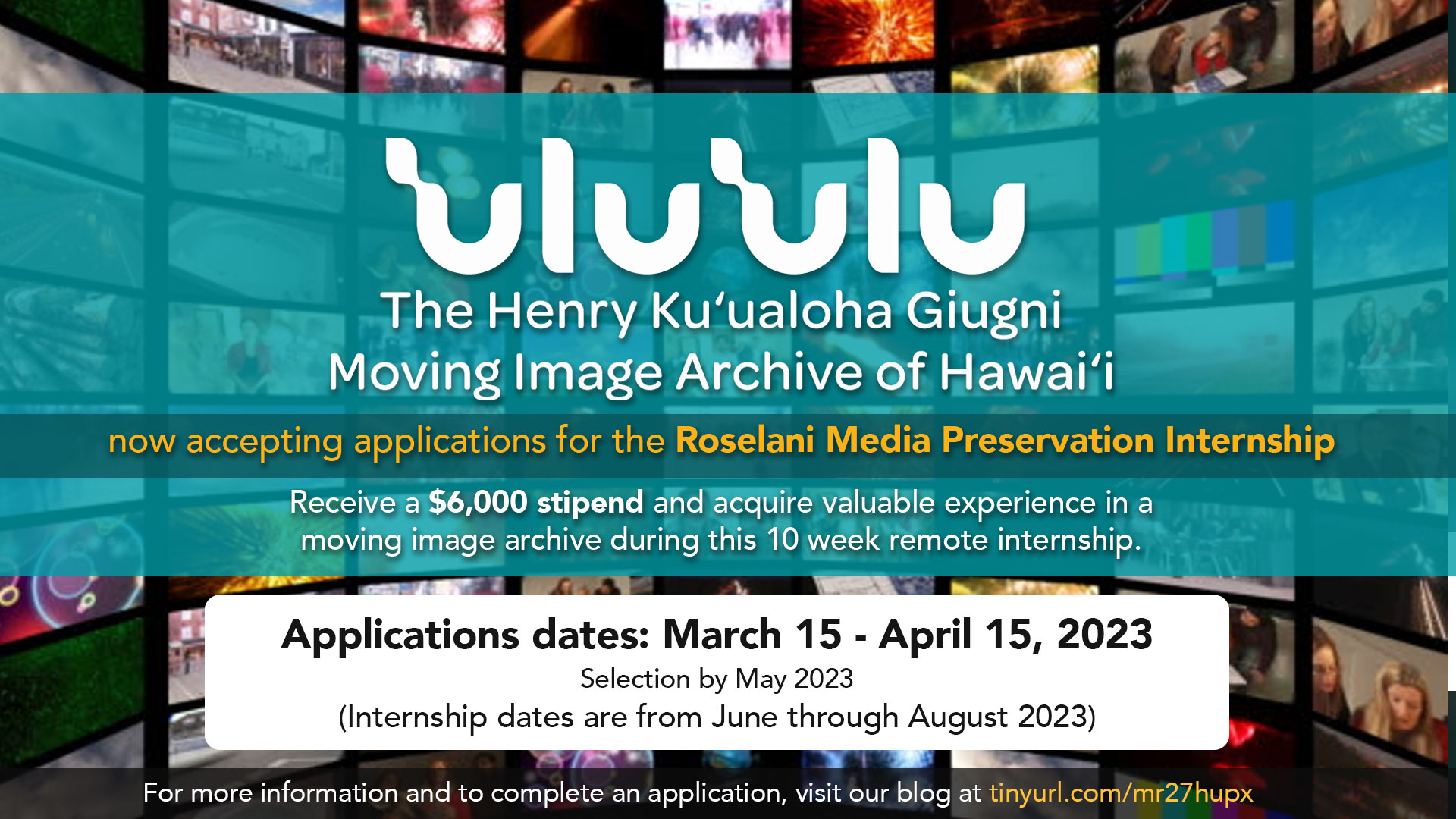
Paid 2023 Summer Roselani Media Preservation Internship (Remote)

Applications are now being accepted for the 2023 Roselani Media Preservation Remote Internship at ‘Ulu‘ulu Moving Image Archive!

The 2023 Roselani Internship at ‘Ulu‘ulu is a host site for the Association of Moving Image Archivists (AMIA) Pathways Fellowship Program. AMIA Pathways Fellows may complete their internship at ‘Ulu‘ulu if accepted into both programs.

To be eligible for the Internship and Fellowship, applicant must also apply for the AMIA Pathways Fellowship: https://amia.link/APFApplication

The student selected as the 2023 Roselani Intern must be committed to the preservation of our media history and enrolled in or a recent graduate of a moving image or archival academic program. Working remotely, but virtually side-by-side with experienced archivists, the intern will gain practical experience in a moving image archive.

The intern will receive a $6,000 stipend. Application and information may be downloaded here.

Key dates: March 15 – April 15: Applications accepted

April 15: Selection made

May – August: Remote internship takes place over 10 consecutive weeks (30 hours per week)

UPDATE

ʻUluʻulu would like to announce that we are extending the deadline for application to the Roselani Summer Internship until the 30th of April.

All other previous information about the internship and AMIA Pathways Fellowship still apply.

Welcome, Lily Lubin!

This summer we are excited to welcome our first Roselani Intern in two years, Lily Lubin. Lily’s Roselani Internship is taking place in conjunction with her Association for Moving Image Archives (AMIA) Pathways Fellowship. ʻUluʻulu is lucky to be working with Lily for a total of ten weeks for her remote internship and fellowship. Read our introductory interview with Lily, below!

Lily Lubin, Roselani Intern and AMIA Pathways Fellow 2022.

Tell us a little bit about your background and how you got into this field of work, Lily.

A little background on me! My full name is Elizabeth, but I’ve always gone by Lily — although it’s a little unclear how that nickname came to be. 

I was adopted from China as a baby and raised on Martha’s Vineyard in Massachusetts. In the summers, my dad and I would often go birdwatching or collect butterflies and insects and my  interests in preservation stemmed from his. As I grew older, I started to notice the absence of certain things — the familiar call of the whippoorwill or luna moths that would gather on the screen door– and my curiosity grew. 

I went to Emerson College as an undergraduate, where I got a degree in screenwriting with minors in comedy and music history. When I was working in production or recording studios, I realized that I most enjoyed projects that related to cataloging or organizing sessionography. The media archives track at UCLA was the perfect opportunity to combine my interests in film and preservation and I hope that I can offer a more emphatic view on materials where others may not.  

Other things! I like to think I’m funny so I make a lot of jokes, whether they land or not.

In my spare time I like to hang out with my cat. I also love to read and listen to music — my record and book collections are constantly growing and I am always open to suggestions! I don’t have a lot of fun facts for myself, but I like to give fun facts, for instance, did you know that John Lennon helped write, and also sang backup vocals on, the David Bowie song “Fame”? 

What brought you here to ‘Ulu‘ulu? What are some of the things you’re hoping to learn during your internship with us?

I discovered ‘Ulu‘ulu and the Roselani Media Preservation internship through UCLA, where I am currently pursuing my masters in Library and Information Sciences and hope to pursue a profession in media archiving. 

During my internship, I hope to learn more about how an archive runs in real life and the intricacies of working in an archive that focuses on the preservation of cultural and historical materials. 

What projects are you working on at ‘Ulu‘ulu?

I have multiple projects that I am working on simultaneously, which I really enjoy because it covers so many different aspects of archiving – and more specifically media archiving – that I have been learning in my courses at UCLA. 

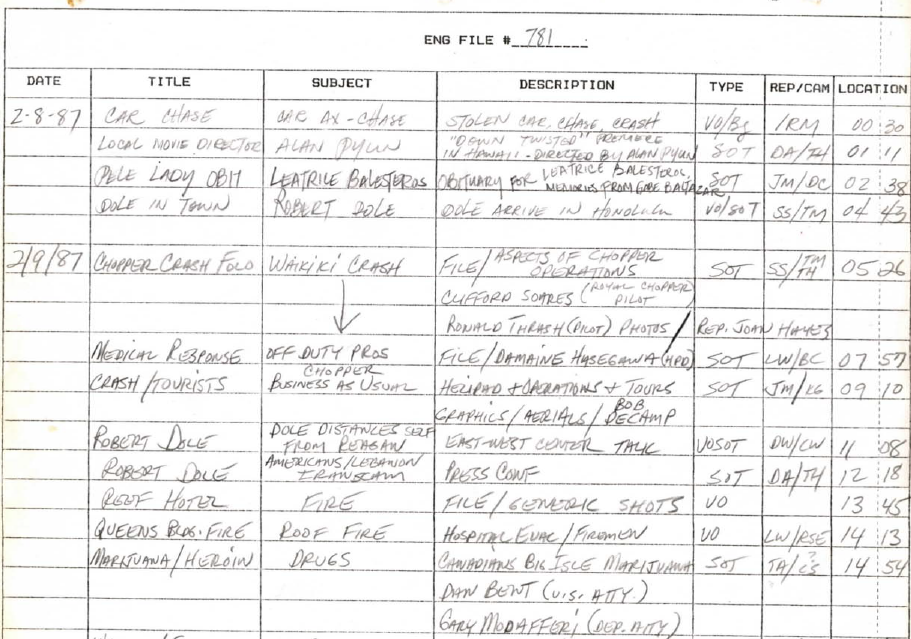
For instance, a couple of my projects involve creating enhanced/detailed descriptions for digitized footage from Juniroa Productions and KGMB ENG news. This project allows me to be creative in determining what information is key for a researcher or archivist when it comes to discovery and access. Similar to this, I have a project that involves transcribing handwritten ENG news log sheets. 

One of the Electronic News Gathering Log Pages Lily is transcribing.

Another project I have is creating captions for clips from the Pau Hana Years for the ‘Ulu‘ulu website – this project was especially fun because there was such a wide range of topics that are covered and so many creative and interesting people featured that I would never have come across otherwise!

Lastly, I have a project which involves checking the quality of the footage once it has been digitized. While I am waiting to start this project, I look forward to it because it is one of the more technical sides to media preservation. 

Is there anything about the items you are working with that is surprising or unexpected?

Something unexpected about the items I’ve worked on is how meticulously the log sheets and ENG footage were kept before coming to the archive. It’s really cool that someone had the foresight to keep the paper log sheets because it’s a really helpful tool for providing metadata and information that might otherwise be lost to the world.   

Now that  you’ve been at the archive for a little while now, have you found a favorite aspect?

One of my favorite aspects has been watching footage from the 70s and 80s. I wasn’t incredibly familiar with Hawaiian history before entering this internship and I’ve learned a lot about what life was like at that time. 

Do you have any advice for future ‘Ulu‘ulu Interns?

Don’t be afraid to look things up! There are times when I just can’t quite figure out what someone is saying or what is written, so I’ll search for it online. It’s amazing and scary how much is on the internet, but it’s a useful tool to ensure that there are as few blanks as possible. It’s a win-win on both ends because the work will be more accurate and you always learn something new. 

Please tell us a joke! 

One of my favorite knee slappers is a fruit related joke:

One fruit said to the another “I can’t elope” 

To which the other said, “but honey do!”

Thank you, Lily for sharing so much with us!

Through the generous support of the Henry Ku‘ualoha & Muriel Roselani Giugni Fund of the Hawai‘i Community Foundation, the Roselani Media Preservation Internship is offered each year at ‘Ulu‘ulu to give a student of merit who is committed to the preservation of our media history the opportunity to acquire practical experience in a moving image archive.